Main Course page

Unit 1: Finding, reframing and resolving design problems

Area of Study 1
Reframing design problems · ~4 weeks
On completion of this unit the student should be able to create visual language for a business or brand using the Develop and Deliver stages of the VCD design process.
Area of Study 2
Solving design problems · ~6 weeks
On completion of this unit the student should be able to create visual language for a business or brand using the Develop and Deliver stages of the VCD design process.
Area of Study 3
Design’s influence and influences on design · ~6 weeks
On completion of this unit the student should be able to develop a sustainable object, considering design’s influence and factors that influence design.
Unit 1 Exam
Revision · ~2 weeks
Exam resources to consolidate key knowledge and skills from Unit 1.

Unit 2: Design contexts and connections

Area of Study 1
Design, place and time · ~6 weeks
On completion of this unit the student should be able to present an environmental design solution that draws inspiration from its context and a chosen design style.
Area of Study 2
Cultural ownership and design · ~4 weeks
On completion of this unit the student should be able to apply culturally appropriate design practices and an understanding of the designer’s ethical and legal responsibilities when designing personal iconography.
Area of Study 3
Designing interactive experiences · ~6 weeks
On completion of this unit the student should be able to apply the VCD design process to design an interface for a digital product, environment or service.
Unit 2 Exam
Revision · ~2 weeks
Exam resources to consolidate key knowledge and skills from Unit 2.

Unit 3: Visual communication in design practice

Area of Study 1
Professional design practice · ~4 weeks
On completion of this unit the student should be able to compare the ways in which visual communication practices are used by contemporary designers, using research methods and practical exploration.
Area of Study 2
Design analysis · ~3 weeks
On completion of this unit the student should be able to compare and analyse design examples from selected field(s) of design practice, describing how aesthetic considerations contribute to the effective communication of information or ideas.
Unit 3 Exam
Revision · ~2 weeks
Exam resources to consolidate key knowledge and skills from Unit 3.
Area of Study 3 (SAT folio)
Defining problems and developing ideas · ~8 weeks
On completion of this unit the student should be able to identify two communication needs for a client, prepare a brief and develop design ideas, while applying the VCD design process and design thinking strategies.

Unit 4: Delivering design solutions

Area of Study 1
Refining and resolving design concepts · ~8 weeks
On completion of this unit the student should be able to refine and resolve distinct design concepts for each communication need, and devise and deliver a pitch to communicate concepts to an audience or users, evaluating the extent to which these meet the requirements of the brief.
Area of Study 2
Presenting design solutions · ~3 weeks
On completion of this unit the student should be able to produce a design solution for each communication need defined in the brief, satisfying the specified design criteria.
Final Exam
Revision · ~3 weeks
Exam resources to consolidate key knowledge and skills from Unit 4.


Unit 2 Outcome 2: Cultural ownership and design

How do designers evolve culturally appropriate design practices?

Introduction

OUTCOME SUMMARY

Students explore how designers evolve culturally appropriate design practices.

This outcome focuses on cultural ownership, intellectual property, respectful representation and the ethical responsibilities designers carry when working with cultural knowledge.

Students investigate culturally informed visual language before developing a vector icon set for three selected Olympic summer or winter sports.

The outcome also includes a written SAC focused on Indigenous Cultural and Intellectual Property, protocols, and the Australian Indigenous Design Charter.

OUTLINE

  • 1. Discover

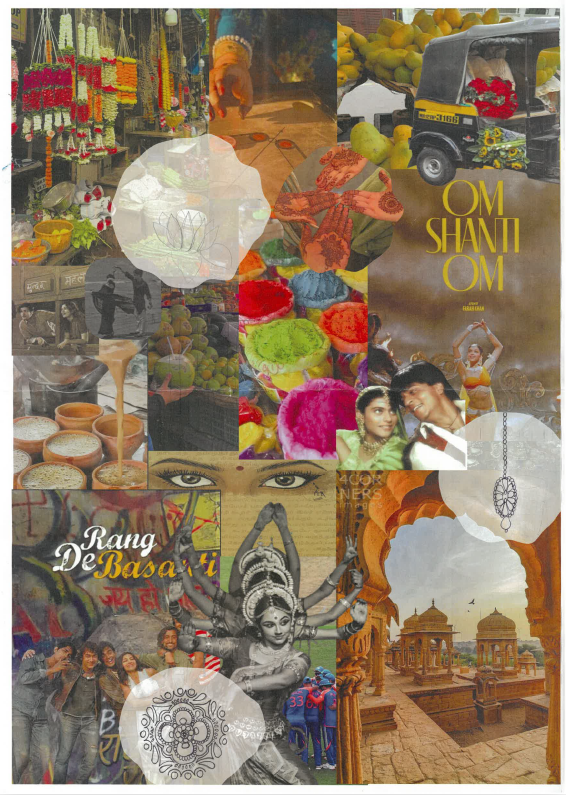
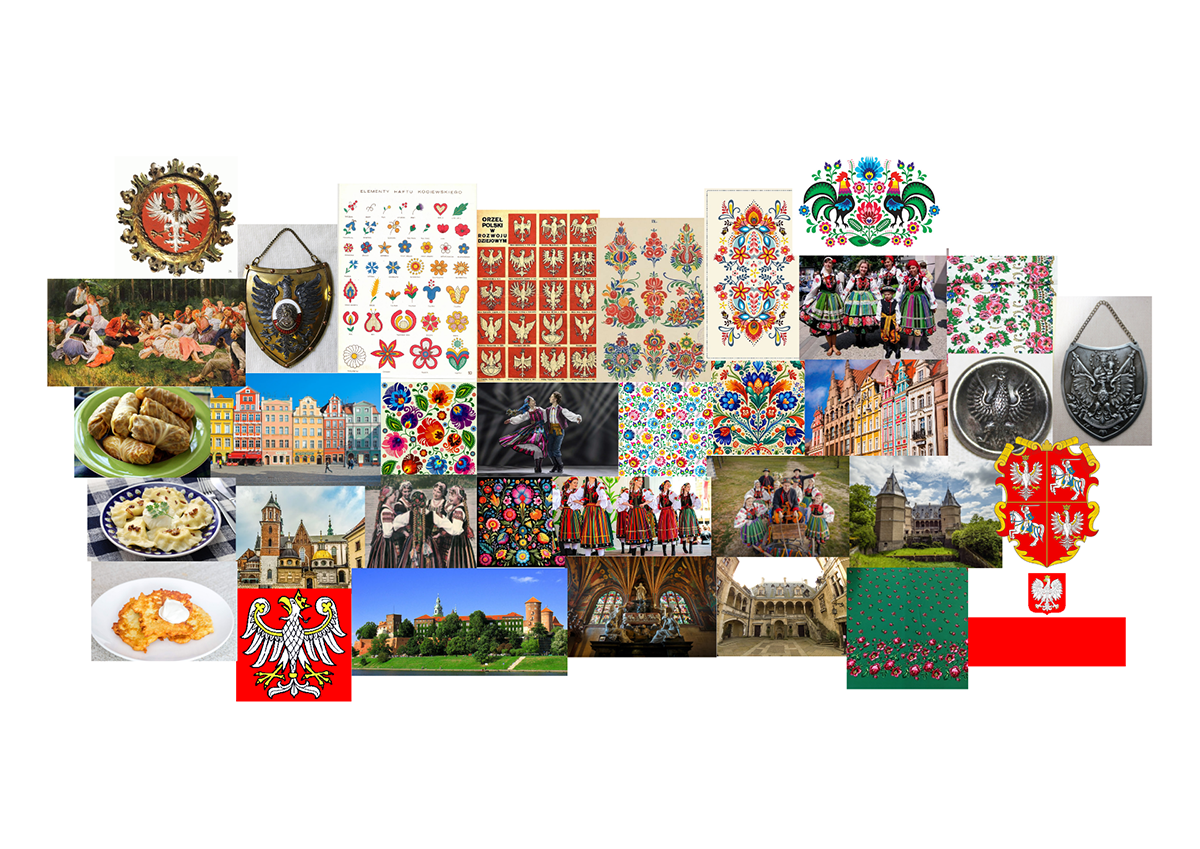
    Build a nuanced cultural moodboard that explores visual language, identity, context and respectful research practice.

  • 2. Draw

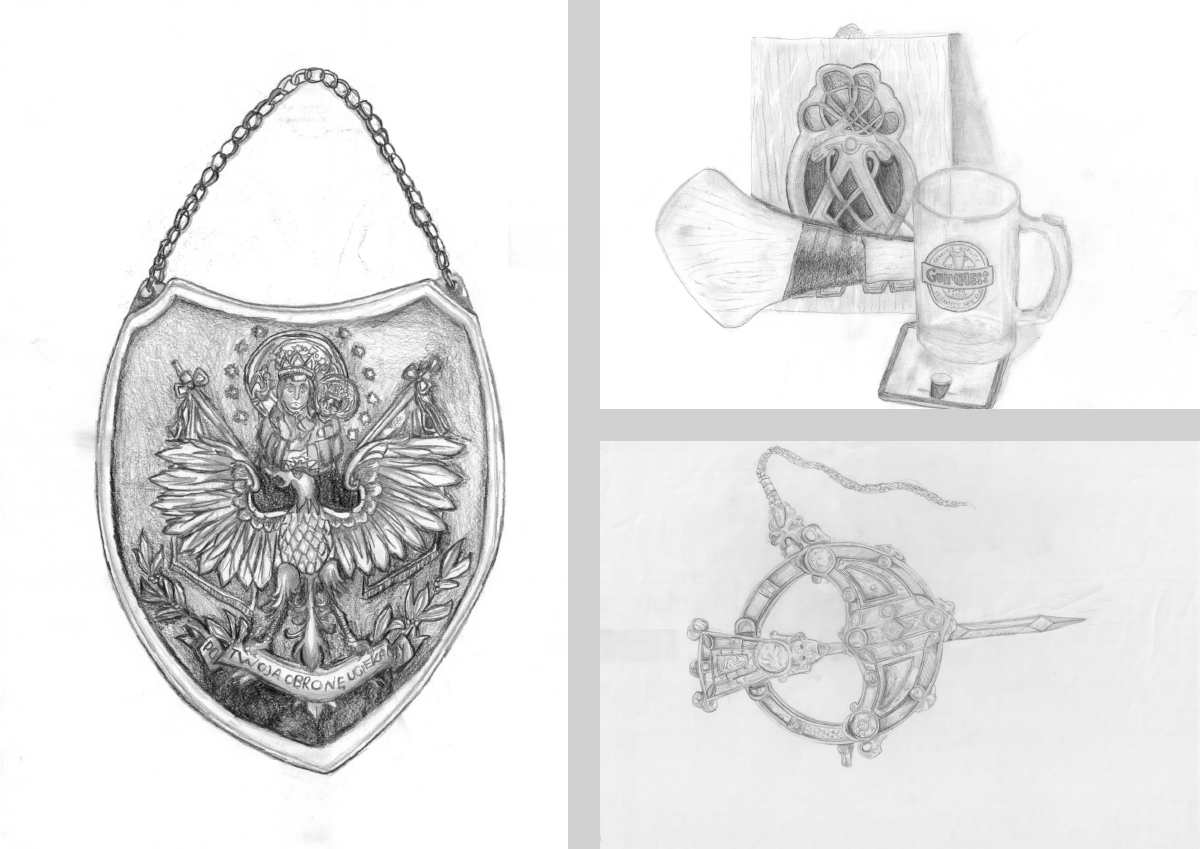
    Carefully select and draw objects, forms, materials or motifs that reveal visual qualities from the chosen culture.

  • 3. Develop

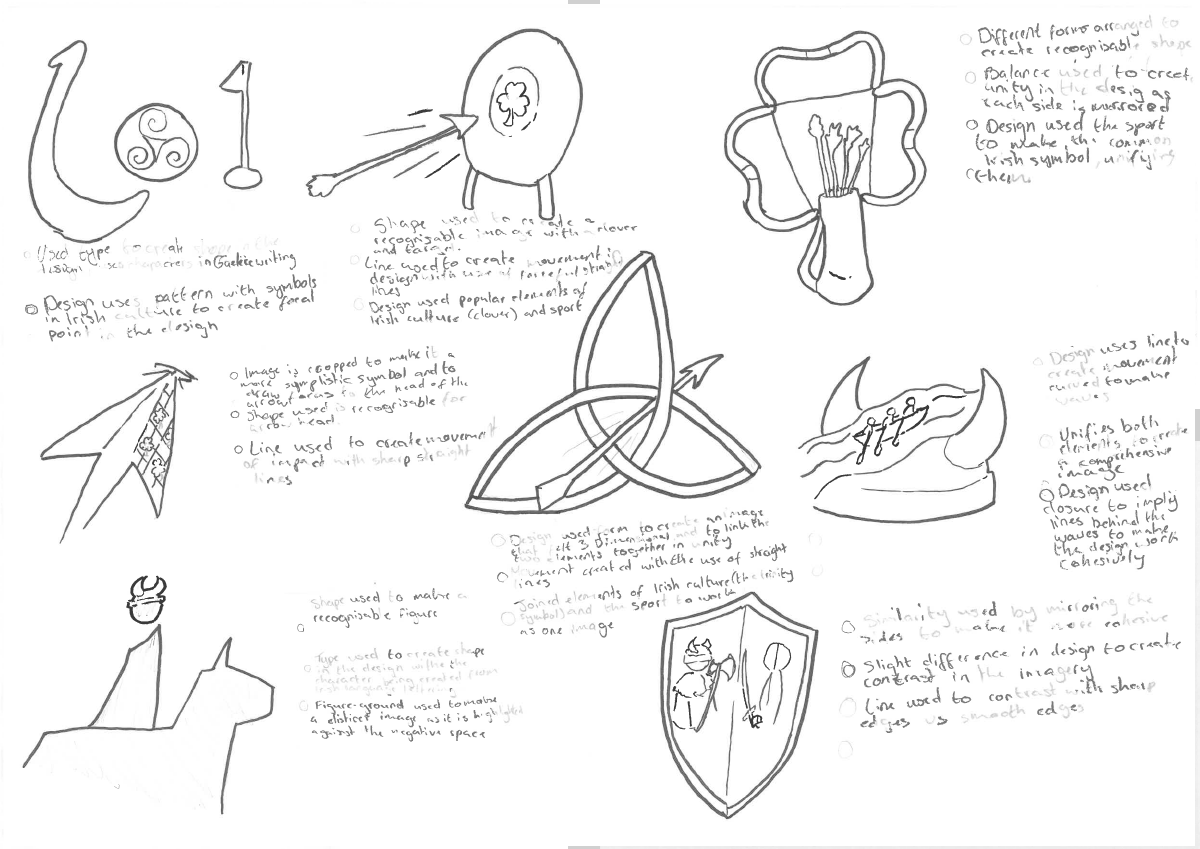
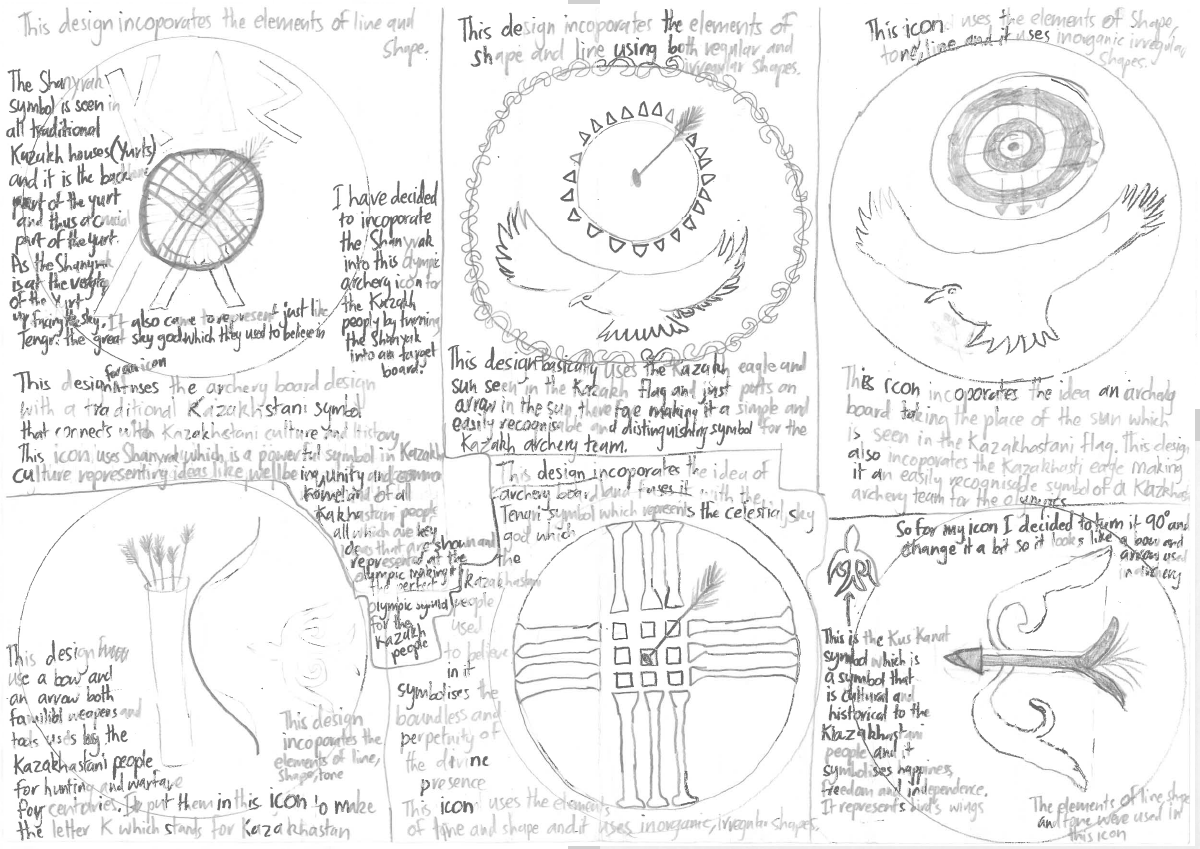
    Generate icon concepts for three selected Olympic summer or winter sports through culturally appropriate visual exploration.

  • 4. Deliver

    Resolve and present a cohesive vector icon set for three Olympic sports with a written rationale explaining cultural and design decisions.

  • 5. Written SAC

    Demonstrate understanding of ethical and legal responsibilities, ICIP, protocols and the Australian Indigenous Design Charter.

1. Discover

1. DISCOVER

Students create a cultural moodboard for a three-sport Olympic icon set.

They investigate the visual language of their own culture or a respectfully chosen culture, looking closely at colour, pattern, material, form, symbol, composition and meaning. The board should move beyond surface styling and provide strong visual evidence for later drawing and icon development.

CONNECTING TO THE STUDY DESIGN

This task connects culturally appropriate design practice with a commercial design context. Students begin to understand that culture is not simply an aesthetic style, but a context shaped by people, histories, values, beliefs, ownership and intellectual property. The task supports the Discover phase and builds language for later design decisions.

Tips

Begin with a discussion about cultural appreciation, cultural connection and appropriation. Encourage students to record sources carefully and prioritise material created by people from the relevant culture or community. Ask them to annotate visual qualities clearly, linking each choice to cultural meaning and future Olympic icon possibilities for later design decisions.


Cultural visual language research

Task items 1-2 (Very low) 3-4 (Low) 5-6 (Medium) 7-8 (High) 9-10 (Very high)
Depth of cultural research

Nuance, context and appropriateness of references
Cultural references are unclear, inappropriate or superficial. Limited understanding of cultural characteristics or context. Identifies some relevant cultural features and meanings. Cultural features are clearly researched, contextualised and respectfully represented. Demonstrates nuanced, informed and respectful cultural understanding beyond surface aesthetics.
Visual language

Colour, texture, shape, form, pattern and composition
Minimal use of visual elements. Limited exploration of visual language. Appropriate use of some visual elements. Visual language clearly reflects the chosen culture and begins to suggest icon possibilities. Visual language is cohesive, intentional, culturally meaningful and useful for later sporting icon development.
Moodboard composition

Organisation, hierarchy and clarity
Disorganised and difficult to read. Limited organisation. Clear layout with basic structure. Well-organised and visually coherent. Highly effective composition that enhances communication.
Respect and sensitivity

Ethical awareness in cultural research and representation
Work shows little awareness of cultural sensitivity. Some consideration of respect, inconsistently applied. Generally respectful representation. Thoughtful and culturally appropriate research choices. Demonstrates strong ethical awareness, cultural care and avoidance of tokenism.
Use of design terminology and annotation No design terminology used. Limited or inaccurate terminology. Some correct terminology used. Accurate and appropriate terminology throughout. Terminology is used confidently to support cultural and visual-language analysis.

Key knowledge covered (Unit 2, Outcome 2 - Part 1)

✓ / ✗ Key knowledge
✗ ethical and legal responsibilities impacting the work of the designer, such as issues of ownership and intellectual property
✗ protocols for the creation and commercial use of Indigenous knowledge in design, including representations of Aboriginal and Torres Strait Islander culture
✓ culturally appropriate design practices for the creation of personal iconography
✓ characteristics and functions of design elements and principles
✗ methods and processes used to generate and present original design solutions
✓ terminology used to discuss and evaluate culturally appropriate design practices and solutions

Key skills covered (Unit 2, Outcome 2 - Part 1)

✓ / ✗ Key skills
✗ describe the ethical and legal responsibilities of the designer and how issues such as ownership and intellectual property impact design practice
✓ describe and apply culturally appropriate design practices
✓ analyse the work and practices of Aboriginal and Torres Strait Islander designers
✗ select and use a range of appropriate manual and digital methods, media, materials and design elements and principles to develop personal iconography
✗ use divergent and convergent thinking strategies to generate ideas and resolve design solutions
✓ use terminology aligned with culturally appropriate design practice

Reference

Design Process

Reference

Design Factors: Cultural influence

Example

Student example 1

Example

Student example 2


2. DRAW

2. DRAW

Students draw carefully selected objects, forms, materials or motifs from their chosen culture.

The aim is to build an informed visual vocabulary that can be transformed into original Olympic sporting icons. Drawings should focus on meaningful visual features, such as structure, surface, pattern, texture or silhouette, rather than copying cultural imagery for decoration.

CONNECTING TO THE STUDY DESIGN

This task supports culturally appropriate practice through close observation and analysis. Students select and use manual methods, media and materials while studying design elements, principles and cultural meaning. Their drawings become evidence for how visual qualities from culture, identity, community or place can inform later Olympic icon development with care.

Tips

Guide students to avoid sacred, restricted or poorly understood imagery unless they have clear permission and context. Demonstrate form, tone and detail studies before final drawings begin. Ask students to annotate why each item was chosen and how its visual qualities could influence sporting icon design before final development begins.


Observational drawing for culturally informed sporting icons

Task items 1-2 (Very low) 3-4 (Low) 5-6 (Medium) 7-8 (High) 9-10 (Very high)
Selection of visual source

Relevance, care and cultural appropriateness
Source choice is unclear, inappropriate or disconnected from the chosen culture. Source choice has limited relevance or cultural consideration. Source choice is relevant and generally appropriate. Source choice is thoughtful, relevant and culturally appropriate. Source choice is highly considered, meaningful and clearly useful for later icon development.
Accuracy of form

Proportions and structure
Form is inaccurate and poorly observed. Basic form is present but proportions are inconsistent. Form is generally accurate with minor errors. Form is accurately observed and well proportioned. Highly accurate and confident representation of form.
Visual detail

Texture, materiality, pattern and surface qualities
Visual detail is not represented. Texture, pattern or material detail is attempted but unclear. Some visual details are communicated effectively. Visual details are clearly and thoughtfully represented. Visual details are rendered with high sensitivity and control.
Cultural awareness

Respectful observation, analysis and annotation
Little awareness of cultural significance. Limited consideration of cultural meaning. Some awareness of the source's cultural context. Clear respect and understanding of cultural significance. Strong sensitivity and insight into cultural meaning.
Translation potential

Usefulness for sporting icon development
Drawing offers little visual information for later icon development. Drawing includes limited visual qualities that could inform icons. Drawing includes some useful forms, details or patterns for icon development. Drawing clearly identifies visual qualities that can inform the icon set. Drawing provides rich, carefully observed visual material for original sporting icon development.

Key knowledge covered (Unit 2, Outcome 2 - Part 2)

✓ / ✗ Key knowledge
✗ ethical and legal responsibilities impacting the work of the designer, such as issues of ownership and intellectual property
✗ protocols for the creation and commercial use of Indigenous knowledge in design, including representations of Aboriginal and Torres Strait Islander culture
✓ culturally appropriate design practices for the creation of personal iconography
✓ characteristics and functions of design elements and principles
✓ methods and processes used to generate and present original design solutions
✓ terminology used to discuss and evaluate culturally appropriate design practices and solutions

Key skills covered (Unit 2, Outcome 2 - Part 2)

✓ / ✗ Key skills
✗ describe the ethical and legal responsibilities of the designer and how issues such as ownership and intellectual property impact design practice
✓ describe and apply culturally appropriate design practices
✗ analyse the work and practices of Aboriginal and Torres Strait Islander designers
✓ select and use a range of appropriate manual and digital methods, media, materials and design elements and principles to develop personal iconography
✗ use divergent and convergent thinking strategies to generate ideas and resolve design solutions
✓ use terminology aligned with culturally appropriate design practice

Reference

Design Process

Reference

Design Factors: Cultural influence

Reference

Methods, Media and Materials

Example

Student example 1


3. Develop

3. DEVELOP

Students generate icon concepts for three selected Olympic summer or winter sports.

Concepts should combine clear sport recognition with meaningful cultural visual language. Students explore simplification, silhouette, consistency, shape, line, scale and hierarchy, testing how cultural qualities can inform the icons across the full set without becoming decorative or superficial.

CONNECTING TO THE STUDY DESIGN

This task applies culturally appropriate design practice in the Develop phase. Students use divergent thinking to generate a range of options, then convergent thinking to select stronger directions. They apply design elements and principles to create a cohesive three-icon set that communicates both sport and cultural meaning for public use.

Tips

Use the Olympic pictogram video to discuss clarity, consistency and simplification. Encourage many small thumbnails before students move into vector work. Test each icon at small sizes, checking that the sport remains recognisable and that cultural influence feels meaningful rather than added as decoration before refining them in vector software.


Olympic sporting icon ideation

Task items 1-2 (Very low) 3-4 (Low) 5-6 (Medium) 7-8 (High) 9-10 (Very high)
Sport selection and clarity

Three summer or winter Olympic sports
Sports are unclear, incomplete or difficult to recognise. Some sports are identifiable, but clarity is inconsistent. Three sports are selected and generally recognisable. Three selected sports are clear and effectively simplified. Three selected sports are highly recognisable, concise and visually engaging.
Cultural visual language

Meaningful integration, not decoration
Little or no cultural influence is evident, or references are inappropriate. Cultural influence is superficial or mostly decorative. Some relevant cultural visual qualities are evident. Cultural visual language is integrated respectfully and meaningfully. Cultural visual language is nuanced, respectful and strongly connected to research.
Application of design elements and principles

Line, shape, balance, contrast and proportion
Design elements and principles are not evident. Limited or inconsistent use of elements and principles. Elements and principles are applied with some effectiveness. Elements and principles support clarity and cohesion. Elements and principles strongly enhance clarity, meaning and visual impact.
Breadth of ideation

Divergent exploration and iteration
Few ideas are generated or development is incomplete. Limited idea generation with little variation. A range of ideas is explored for the three sports. Ideas show purposeful iteration and increasing clarity. Ideas show rich exploration, strong iteration and thoughtful selection.
Annotations and explanation Little or no annotation provided. Annotations are descriptive but limited. Annotations explain basic design decisions. Annotations clearly justify design choices. Annotations provide insightful justification of sporting clarity, cultural influence and design decisions.

Key knowledge covered (Unit 2, Outcome 2 - Part 3)

✓ / ✗ Key knowledge
✗ ethical and legal responsibilities impacting the work of the designer, such as issues of ownership and intellectual property
✗ protocols for the creation and commercial use of Indigenous knowledge in design, including representations of Aboriginal and Torres Strait Islander culture
✓ culturally appropriate design practices for the creation of personal iconography
✓ characteristics and functions of design elements and principles
✓ methods and processes used to generate and present original design solutions
✓ terminology used to discuss and evaluate culturally appropriate design practices and solutions

Key skills covered (Unit 2, Outcome 2 - Part 3)

✓ / ✗ Key skills
✗ describe the ethical and legal responsibilities of the designer and how issues such as ownership and intellectual property impact design practice
✓ describe and apply culturally appropriate design practices
✗ analyse the work and practices of Aboriginal and Torres Strait Islander designers
✓ select and use a range of appropriate manual and digital methods, media, materials and design elements and principles to develop personal iconography
✓ use divergent and convergent thinking strategies to generate ideas and resolve design solutions
✓ use terminology aligned with culturally appropriate design practice

Reference

Design Process

Reference

Design Factors: Cultural influence

Video

Olympic pictogram process

Example

Student example 1

Example

Student example 2


4. Deliver

4. DELIVER

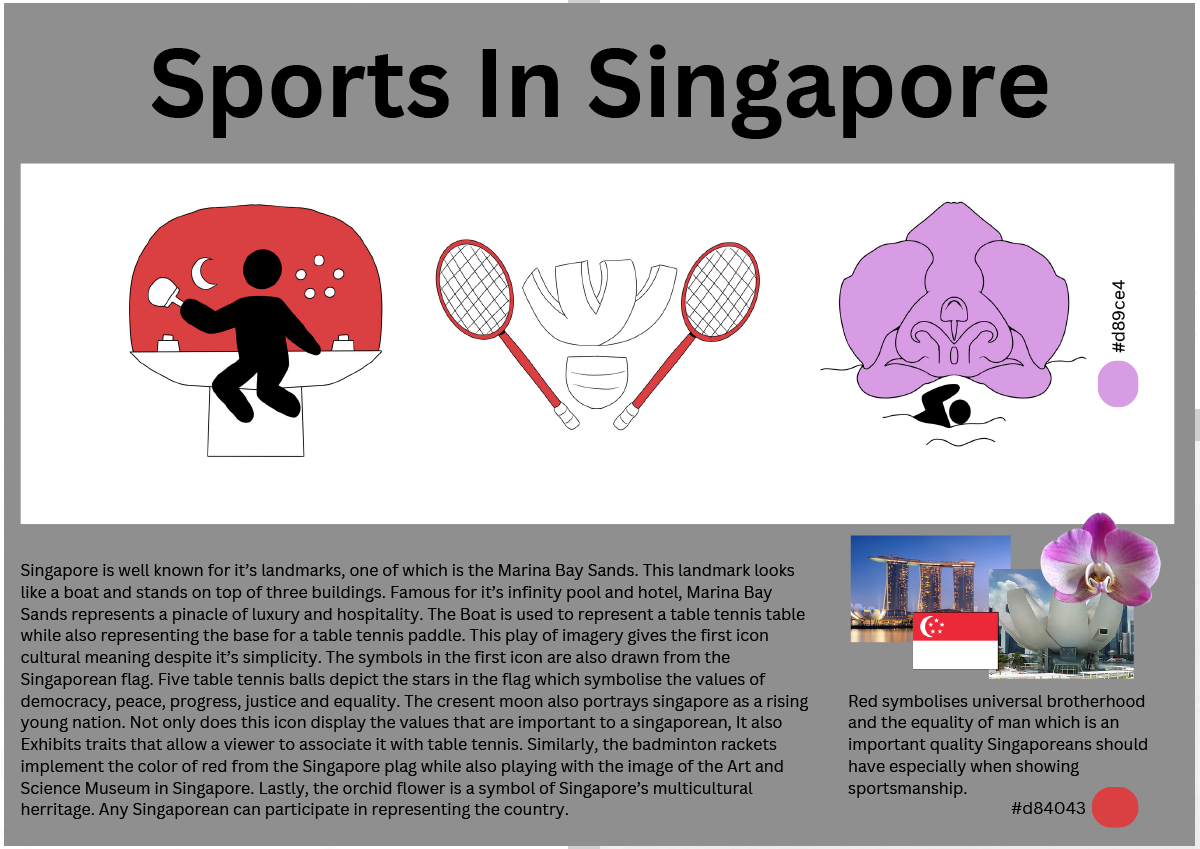
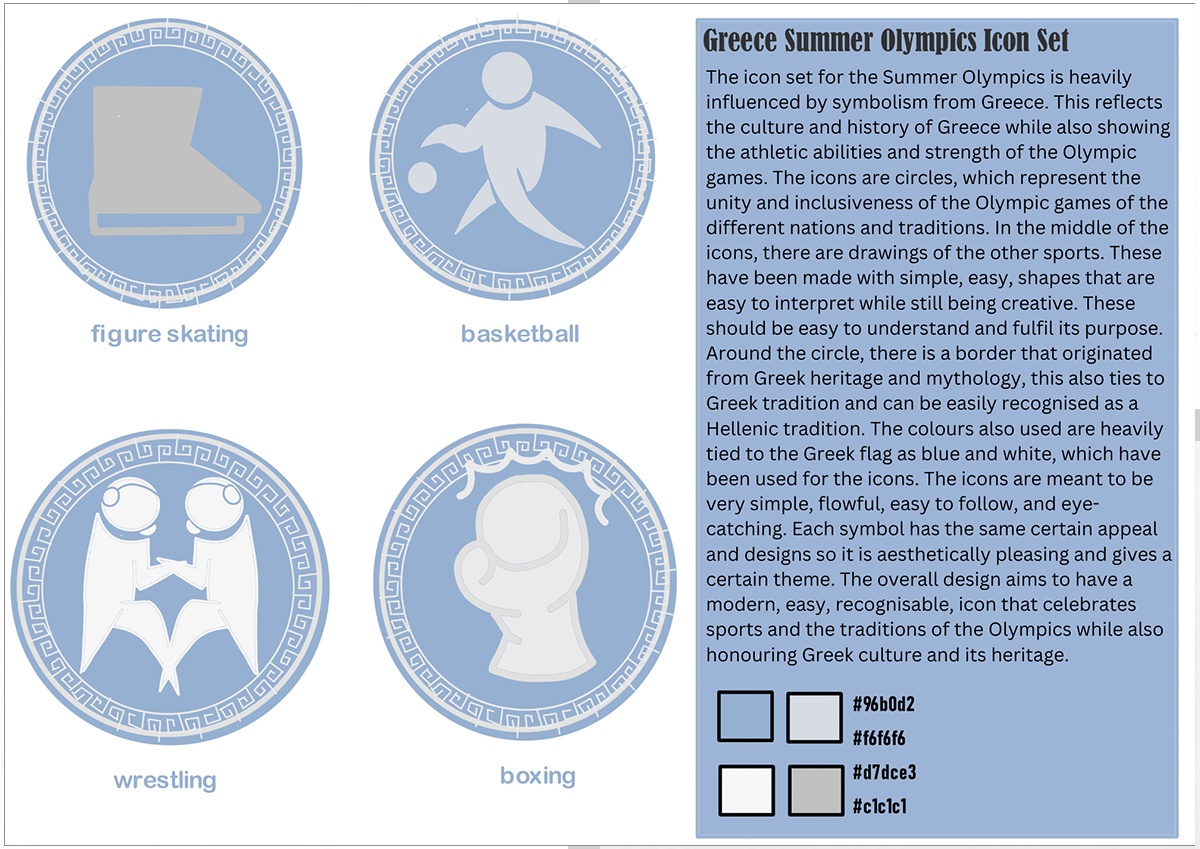
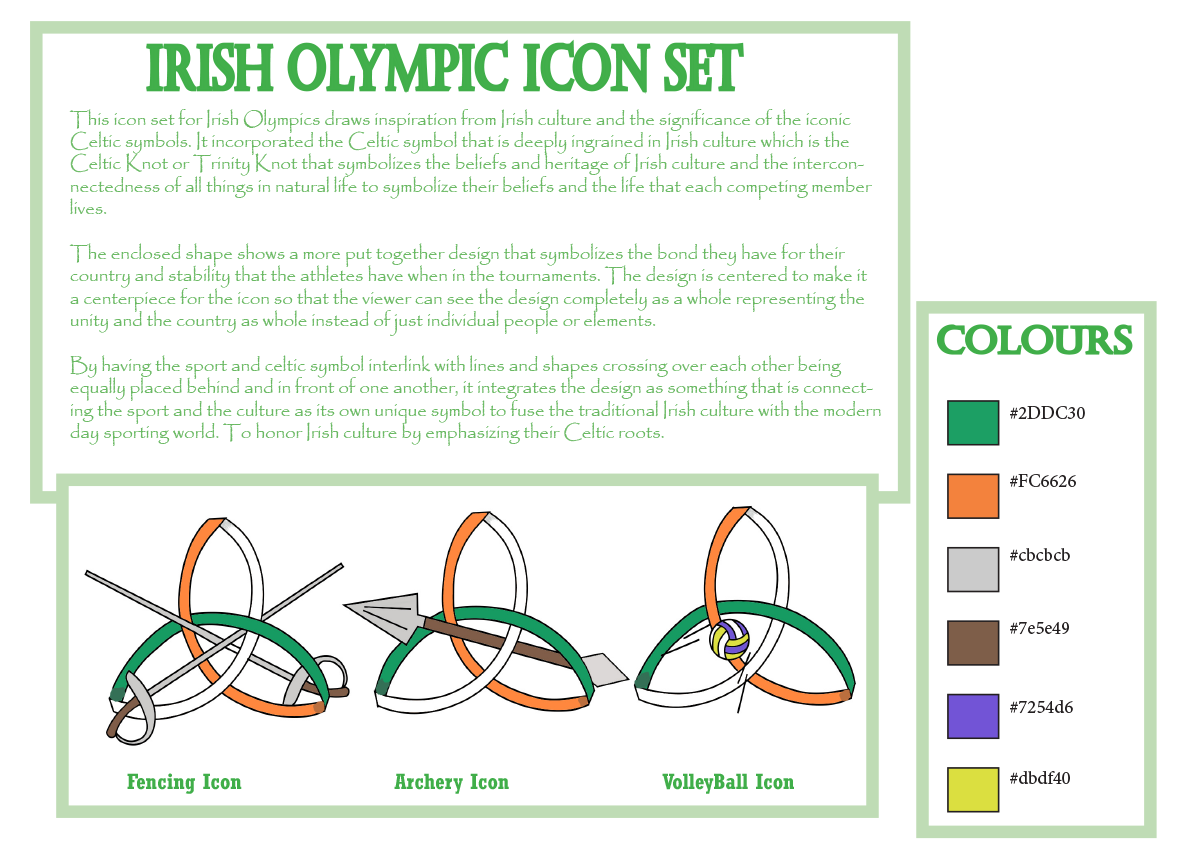
Students present a final vector icon set for three selected Olympic sports.

The icons should be clear, cohesive, technically controlled and culturally sensitive. Students refine alignment, proportion, shape, spacing, stroke and scale so the set works as a professional public communication system at multiple sizes rather than three separate illustrations.

CONNECTING TO THE STUDY DESIGN

This task resolves an original design solution for a public communication context. Students demonstrate culturally appropriate practice through both the final icons and their rationale. They use methods and processes to present a refined solution that communicates sport, cultural influence and design intent clearly for a broad audience in public settings.

Tips

Ask students to view the three icons together and check whether they feel like one set. Use peer critique to test sport recognition, visual consistency and cultural sensitivity. The rationale should briefly explain key research influences, design decisions and how respectful representation was considered before final presentation and final submission.


Resolved Olympic sporting icon set

Task items 1-2 (Very low) 3-4 (Low) 5-6 (Medium) 7-8 (High) 9-10 (Very high)
Three-icon sporting set

Recognition, clarity and completeness
Icon set is incomplete or sports are difficult to recognise. Three icons are attempted, but sport recognition is inconsistent. Three sports are presented and generally recognisable. Three sports are clear, complete and effectively simplified. Three sports are highly recognisable, concise and professionally communicated.
Vector execution and cohesion

Precision, consistency and finish
Icons are poorly constructed and lack cohesion. Basic vector construction with limited consistency across icons. Icons are clean and show general stylistic consistency. Icons are well-constructed, cohesive and clearly related. Icon set demonstrates high precision, unity and professional finish.
Cultural integration

Respectful and meaningful visual language
Cultural references are unclear or inappropriate. Cultural influence is superficial or decorative. Cultural characteristics are evident. Cultural elements are integrated thoughtfully. Cultural integration is sophisticated and respectful.
Application of design elements and principles Limited application of elements and principles. Inconsistent application. Elements and principles are applied appropriately. Elements and principles enhance clarity and function. Elements and principles are applied with precision and intent.
Written rationale

Commercial context, culture and justification
Rationale is missing or unclear. Rationale is descriptive with limited justification. Rationale explains key decisions. Rationale clearly justifies sporting, cultural and design decisions. Rationale provides insightful, well-structured justification for a public commercial-style sporting context.

Key knowledge covered (Unit 2, Outcome 2 - Part 4)

✓ / ✗ Key knowledge
✗ ethical and legal responsibilities impacting the work of the designer, such as issues of ownership and intellectual property
✗ protocols for the creation and commercial use of Indigenous knowledge in design, including representations of Aboriginal and Torres Strait Islander culture
✓ culturally appropriate design practices for the creation of personal iconography
✓ characteristics and functions of design elements and principles
✓ methods and processes used to generate and present original design solutions
✓ terminology used to discuss and evaluate culturally appropriate design practices and solutions

Key skills covered (Unit 2, Outcome 2 - Part 4)

✓ / ✗ Key skills
✗ describe the ethical and legal responsibilities of the designer and how issues such as ownership and intellectual property impact design practice
✓ describe and apply culturally appropriate design practices
✗ analyse the work and practices of Aboriginal and Torres Strait Islander designers
✓ select and use a range of appropriate manual and digital methods, media, materials and design elements and principles to develop personal iconography
✓ use divergent and convergent thinking strategies to generate ideas and resolve design solutions
✓ use terminology aligned with culturally appropriate design practice

Reference

Design Process

Reference

Design Factors: Cultural influence

Video

Olympic pictogram process

Exemplar

Finished exemplar

Example

Student example 1

Example

Student example 2

Example

Student example 3


5. Written SAC

5. WRITTEN SAC

Students complete a written SAC on ethical and legal responsibilities in cultural design practice.

Questions focus on ICIP, ownership, protocols, AIDC and respectful representation. The SAC clearly supports theory not fully assessed in the practical folio, especially Indigenous Cultural and Intellectual Property and responsibilities when designers draw on cultural knowledge.

CONNECTING TO THE STUDY DESIGN

This task assesses ethical, legal and Indigenous design protocol knowledge. Students apply culturally appropriate terminology to short-answer and case-study responses, showing how ownership, intellectual property, permission, attribution and cultural authority affect design practice in real and hypothetical contexts. Students should connect ideas directly to designer responsibilities and cultural protocols clearly.

Tips

Teach AIDC, ICIP, permission, attribution and cultural authority explicitly before the SAC. Detailed references for these ideas are available in the Resources section. Use short practice questions to build clear, evidence-based responses, and remind students to avoid vague opinion by using precise design terminology.

Key knowledge covered (Unit 2, Outcome 2 - SAC)

Covered Key knowledge
✓ ethical and legal responsibilities impacting the work of the designer, such as issues of ownership and intellectual property
✓ protocols for the creation and commercial use of Indigenous knowledge in design, including representations of Aboriginal and Torres Strait Islander culture
✓ culturally appropriate design practices for the creation of personal iconography
✓ characteristics and functions of design elements and principles
✓ methods and processes used to generate and present original design solutions
✓ terminology used to discuss and evaluate culturally appropriate design practices and solutions

Key skills covered (Unit 2, Outcome 2 - SAC)

Covered Key skills
✓ describe the ethical and legal responsibilities of the designer and how issues such as ownership and intellectual property impact design practice
✓ describe and apply culturally appropriate design practices
✓ analyse the work and practices of Aboriginal and Torres Strait Islander designers
✓ select and use a range of appropriate manual and digital methods, media, materials and design elements and principles to develop personal iconography
✓ use divergent and convergent thinking strategies to generate ideas and resolve design solutions
✓ use terminology aligned with culturally appropriate design practice

Written SAC

Question book

Written SAC

Resource book

Written SAC

Marking guide

Reference

Design Factors: Cultural influence

Reference

Indigenous Design Charter

Reference

Indigenous Intellectual Property