How do designers solve design problems?
OUTCOME SUMMARY
Students develop visual language for a branding design through ideation, critique, evaluation and resolution in response to a brief.
Building on Outcome 1, this outcome shifts focus from researching problems to developing, testing and refining design ideas. Students apply divergent thinking to generate options and convergent thinking to evaluate and select a preferred direction.
Across the outcome, students use appropriate design terminology, consider audience, purpose and context, and respond to ethical and legal obligations such as copyright.
The outcome concludes with a resolved branding solution and a written rationale explaining how visual language communicates effectively.
OUTLINE
1. Mind Map
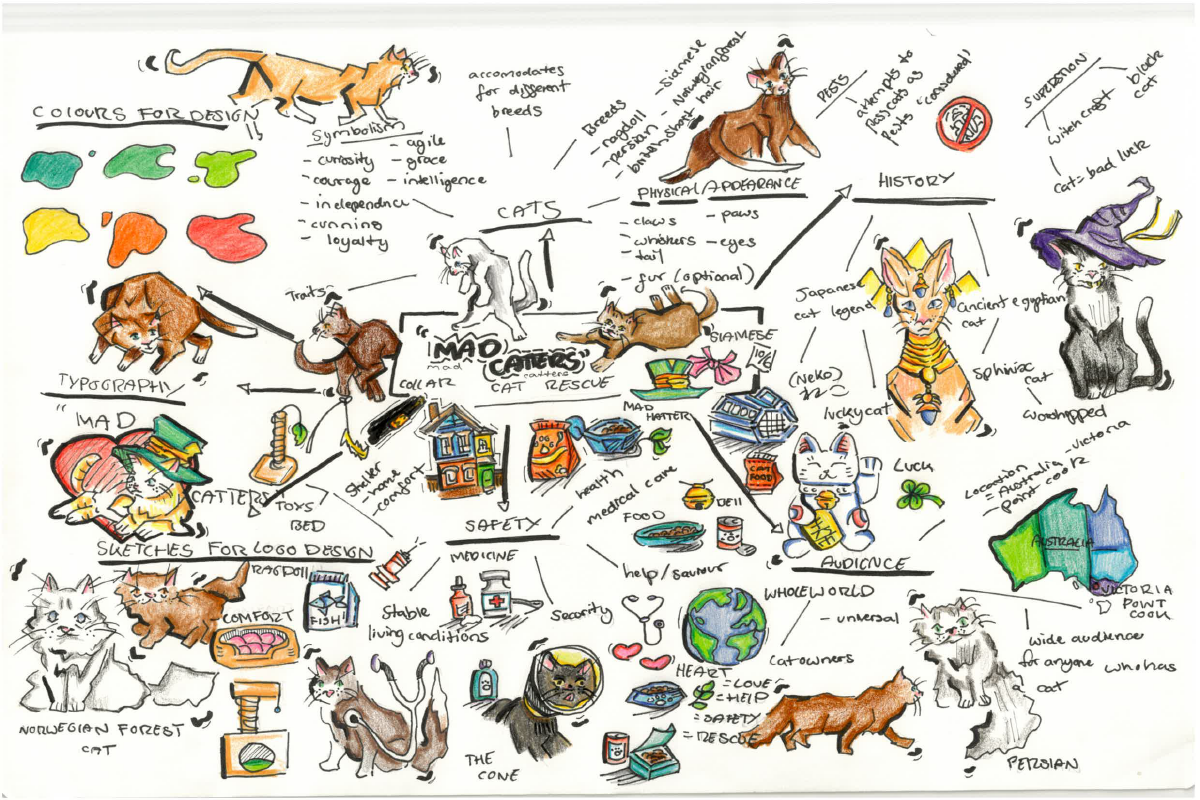
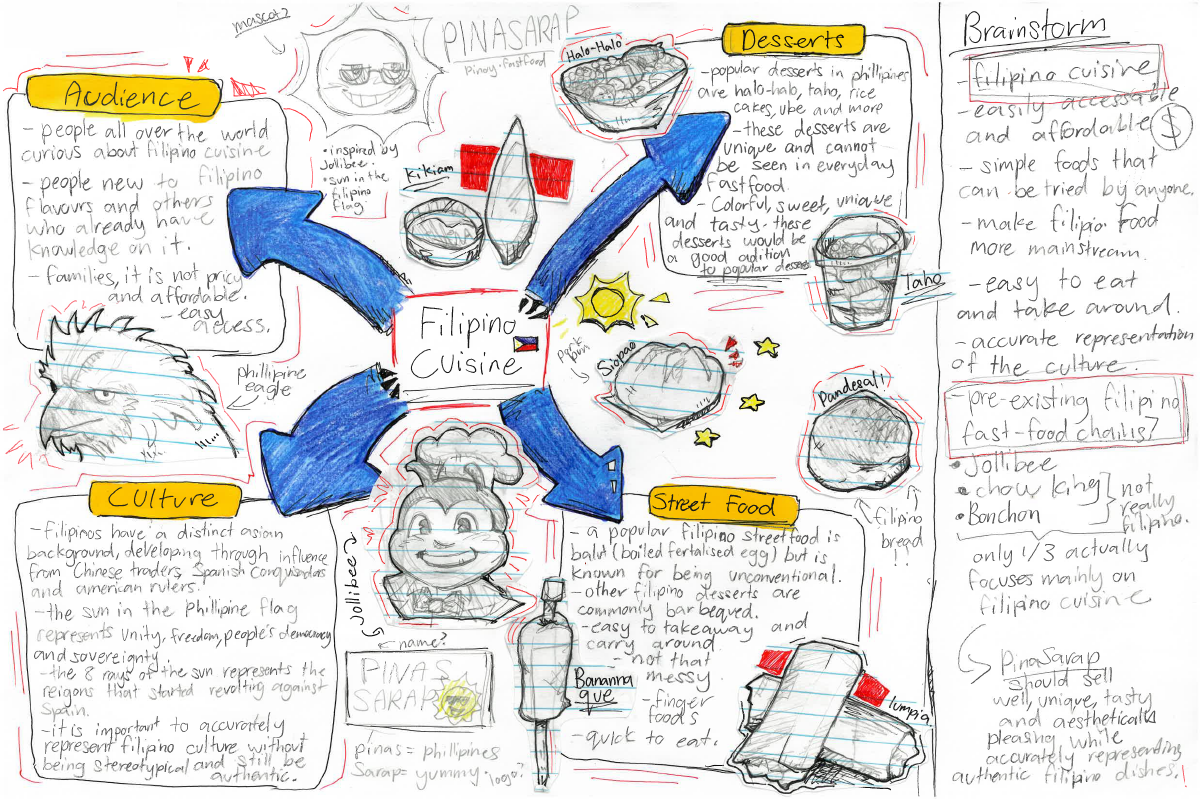
Create a second mind map responding to a branding brief, applying feedback to explore audience, purpose, context and constraints.
2. Develop Ideas
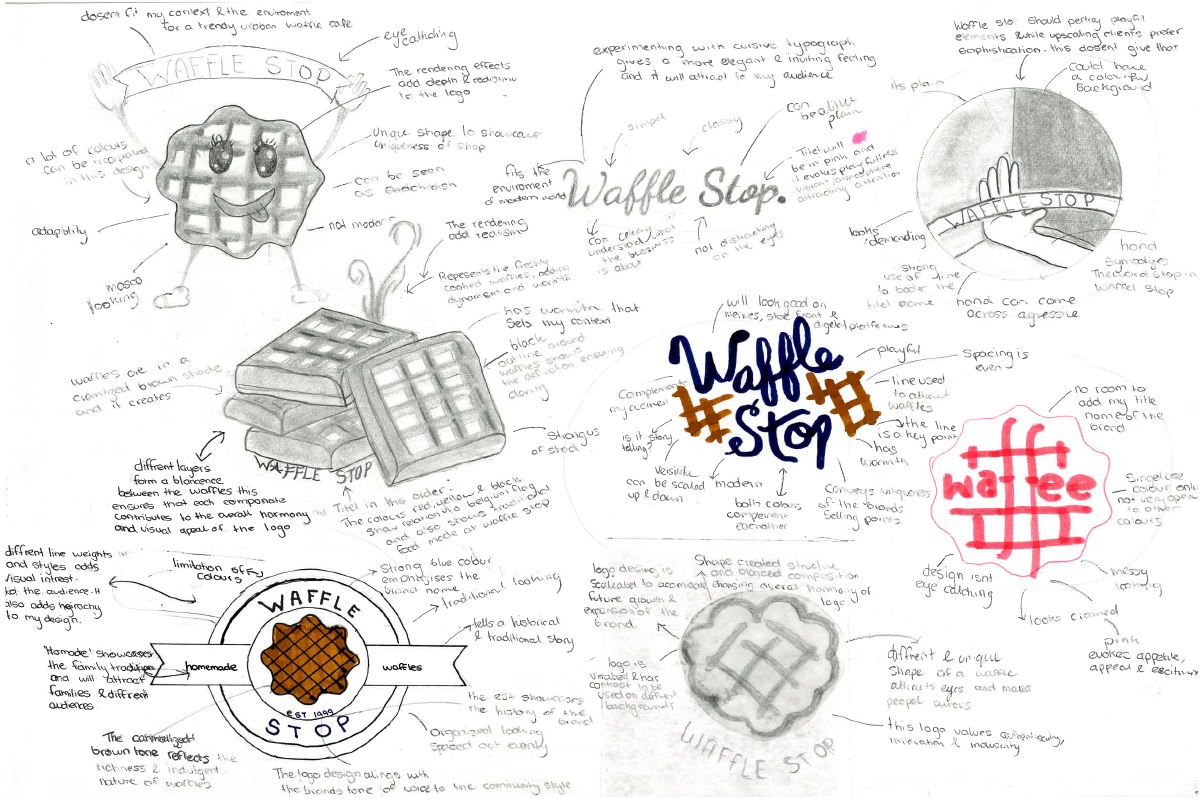
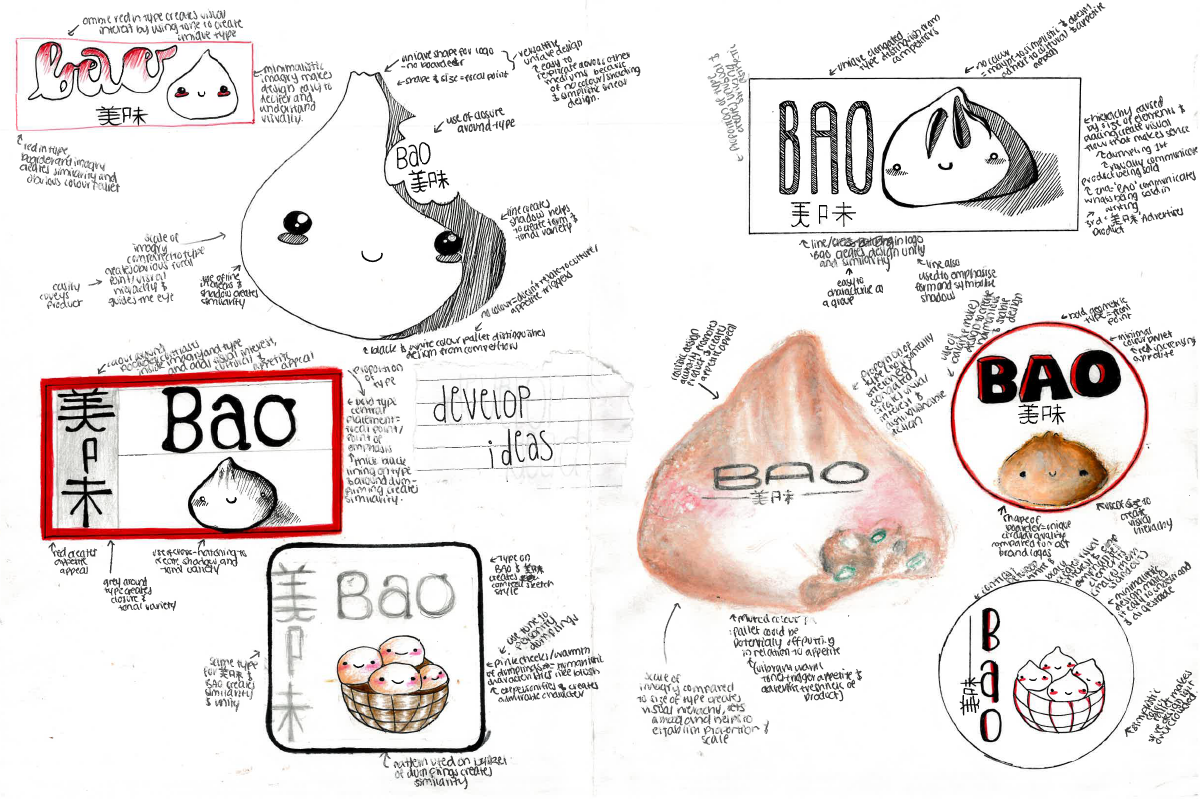
Generate eight annotated ideation sketches exploring varied visual language using design elements, principles and Gestalt principles.
3. Design Critique
Present three strongest ideas, explaining design decisions using terminology and gathering feedback from peers and stakeholders.
4. Design Evaluation
Collect and analyse survey feedback to identify patterns, evaluate effectiveness and select a preferred design direction.
5. Design Solution
Resolve a final branding design and justify decisions in a written rationale using appropriate design terminology.
1. MIND MAP TASK
Students apply divergent thinking to interpret a branding brief through a second, refined mind map.
Building on skills from Outcome 1, students visually explore how the audience, purpose, context, constraints and considerations of the brief influence branding decisions.
Ideas are mapped broadly to identify possible directions for visual language, avoiding early solutions or resolved designs.
The task supports students in unpacking the brief, organising thinking visually and preparing for ideation and concept development.
CONNECTING TO THE STUDY DESIGN
This task supports Unit 1, Outcome 2 by strengthening students’ ability to interpret a brief using divergent thinking.
Students practise the Develop stage of the VCD design process, learning that designers explore possibilities before generating solutions.
Revisiting mind mapping reinforces visual thinking as a professional design practice and builds continuity between Outcome 1 research and Outcome 2 design development.
The task prepares students for ideation, annotation and refinement in later stages of the outcome.
TIPS
Begin by revisiting Outcome 1 mind maps and discussing how feedback improved clarity, depth or focus.
Display a short branding brief and ask students to list everything that could influence design decisions.
Group responses under headings such as audience, purpose, context and constraints.
Model a brief mind map example, emphasising branching ideas rather than solutions.
Reinforce that this task is about thinking visually and expansively before moving into ideation.
Interpreting a branding brief through divergent mind mapping
| Task items | 1-2 (Very low) | 3-4 (Low) | 5-6 (Medium) | 7/8 (High) | 9/10 (Very high) |
|---|---|---|---|---|---|
|
Interpretation of the brief Identification of audience, purpose, context and constraints Understanding of the design problem |
Demonstrates little understanding of the brief. Key components are missing or misunderstood. |
Identifies some components of the brief. Understanding is partial or unclear. |
Identifies most components of the brief accurately. Shows a general understanding of the design problem. |
Clearly interprets the brief. Audience, purpose and context are well understood and connected. |
Demonstrates a thorough and insightful understanding of the brief. Components are clearly connected and interpreted with purpose. |
|
Breadth of exploration Range of ideas generated from the brief Evidence of divergent thinking |
Very few ideas are explored. Thinking is narrow or solution-focused. |
Some ideas are explored. Exploration remains limited in scope. |
A range of relevant ideas are explored. Demonstrates basic divergent thinking. |
Explores multiple directions informed by the brief. Divergent thinking is purposeful and sustained. |
Demonstrates expansive and imaginative exploration. Ideas show strong divergence and potential for development. |
|
Relevance to the chosen brand Alignment to audience, purpose and context Appropriateness of ideas |
Ideas show little relevance to the chosen brief. Connections are unclear. |
Some ideas relate to the brief. Relevance is inconsistent. |
Ideas are generally relevant to the brief. Links to audience and purpose are evident. |
Ideas are clearly aligned to the brand context. Audience and purpose are thoughtfully considered. |
Ideas are highly relevant and specific to the brand. Strong alignment to audience, purpose and context is demonstrated. |
|
Visual organisation and clarity Structure, hierarchy and grouping of ideas Effectiveness of visual communication |
Mind map is disorganised and difficult to follow. Visual structure does not support understanding. |
Limited organisation is evident. Some ideas are unclear or poorly grouped. |
Ideas are organised in a clear and readable way. Visual structure supports basic understanding. |
Visual organisation enhances clarity. Hierarchy and grouping support communication of ideas. |
Visual organisation is highly effective and engaging. Structure clearly communicates complex thinking. |
|
Use of design terminology Accurate use of terms (audience, purpose, context, constraints, visual language) Terminology supports meaning |
No design terminology is used. Language is vague or unclear. |
Limited terminology is used or used incorrectly. Meaning is sometimes confusing. |
Some correct terminology is used appropriately. Language generally supports understanding. |
Terminology is used accurately and consistently. Language helps clarify ideas. |
Terminology is used confidently and precisely. Language clearly supports interpretation of the brief and design thinking. |
Key knowledge covered (Unit 1, Outcome 2 – Part 1)
| ✓ / ✗ | Key knowledge |
|---|---|
| ✗ | the role of the brief in developing and evaluating design solutions |
| ✗ | legal and ethical obligations of designers relating to copyright and intellectual property |
| ✓ | methods used to generate communication design ideas |
| ✓ | the role of divergent and convergent thinking in a design process |
| ✓ | techniques for engaging and influencing audiences or users using visual language |
| ✓ | the features and functions of design elements and principles, including typographic conventions and Gestalt principles of visual perception |
| ✗ | manual and digital methods, media and materials used to develop and produce communication design solutions |
| ✗ | techniques to present and critique design ideas |
| ✗ | techniques to deliver and respond to constructive feedback |
| ✓ | appropriate design terminology |
Key skills covered (Unit 1, Outcome 2 – Part 1)
| ✓ / ✗ | Key skills |
|---|---|
| ✓ | apply divergent thinking strategies when seeking inspiration and generating ideas |
| ✗ | apply convergent thinking strategies to synthesise, select and refine design concepts |
| ✓ | select and use a range of appropriate manual methods, media and materials to explore visual language for a specified context and purpose |
| ✗ | apply digital methods, media and materials to develop communication design solutions |
| ✗ | apply convergent thinking strategies to refine design concepts |
| ✗ | present design concepts for critique, and both deliver and respond to feedback |
| ✗ | resolve visual language responding to a given brief |
| ✓ | use appropriate design terminology to explain and explore design thinking |
2. DEVELOP IDEAS
Students use divergent thinking to generate a wide range of branding ideas in response to a brief.
Working quickly, students produce at least eight distinct ideation sketches that explore different visual directions using type, imagery, and composition.
Ideas experiment with design elements, design principles and Gestalt principles, avoiding early refinement or solution fixation.
Each sketch is supported by handwritten annotations explaining how visual language responds to the brief’s audience, purpose and context.
CONNECTING TO THE STUDY DESIGN
This task sits within the Develop stage of the VCD design process, where designers explore possibilities before selecting and refining ideas.
Students apply divergent thinking to generate options, then use annotation to explain and evaluate decisions in relation to the brief.
The task strengthens understanding of visual language in branding, including elements, principles, typographic conventions and Gestalt principles.
It also introduces ethical and legal responsibilities, reinforcing professional expectations around originality and responsible use of inspiration.
Getting started
Begin with an “idea sprint”: students draw eight small boxes and sketch one idea per box in eight minutes using pencil only.
Emphasise speed and risk-taking over polish, reinforcing that ideas should be exploratory rather than resolved.
Model annotation on one sketch, identifying a design element, a design principle and a Gestalt principle, and linking these to audience, purpose and context.
Conclude by reinforcing ethical practice: inspiration is encouraged, but copying is not, and sources should be recorded appropriately.
Ideation sketches and annotated design thinking (branding)
| Task items | 1-2 (Very low) | 3-4 (Low) | 5-6 (Medium) | 7/8 (High) | 9/10 (Very high) |
|---|---|---|---|---|---|
|
Range of ideation sketches Variety of concepts and directions Evidence of divergent thinking |
Fewer than eight ideas, or ideas are almost identical. Limited exploration of possibilities. |
Around eight ideas but with limited variety. Ideas show minimal divergence. |
Eight or more ideas with some variety. Ideas explore a few different directions. |
Eight or more ideas with strong variety. Divergent thinking is purposeful and sustained. |
Extensive variety and originality across ideas. Demonstrates highly effective divergent exploration and risk-taking. |
|
Relevance to the brief Response to purpose, audience and context Alignment to brand strategy/voice |
Ideas show little relevance to the brief. Audience/purpose/context are not considered. |
Some relevance is evident but inconsistent. Links to audience/purpose/context are vague. |
Ideas generally relate to the brief. Basic consideration of audience and purpose is shown. |
Ideas clearly respond to the brief. Audience, purpose and context are thoughtfully considered. |
Ideas respond precisely and convincingly to the brief. Strong alignment to brand voice/strategy and audience needs is evident. |
|
Annotations: elements, principles and Gestalt Accuracy and specificity Links to effectiveness |
Annotations are missing or minimal. Little or no correct design language is used. |
Annotations are basic with limited accuracy. Elements/principles/Gestalt are mentioned but not explained. |
Annotations include some correct references. Basic links to effectiveness are made. |
Annotations are clear and accurate. Elements, principles and Gestalt are used to justify decisions. |
Annotations are highly specific and insightful. Clear, convincing links show how visual language will influence audience understanding and behaviour. |
|
Visual communication quality Clarity of sketches and layout Presentation on A3 (landscape) |
Sketches are unclear or incomplete. Layout makes ideas difficult to interpret. |
Some sketches are readable but clarity is inconsistent. Layout is cluttered or unclear. |
Sketches are mostly clear and understandable. Layout supports basic readability. |
Sketches are clear and communicate ideas effectively. Layout supports comparison between ideas. |
Sketches and layout are highly clear and professional. Presentation strongly supports understanding, selection and critique. |
|
Ethical and legal awareness Acknowledging inspiration Originality and responsible design practice |
No awareness of ethical/legal obligations is shown. Work suggests copying or unacknowledged use of others’ designs. |
Limited awareness is shown. Inspiration is unclear or inconsistently acknowledged. |
Basic awareness is shown. Some sources of inspiration are acknowledged. |
Ethical and legal awareness is clear. Inspiration is acknowledged appropriately and ideas remain original. |
Ethical and legal awareness is explicit and consistent. Inspiration is acknowledged clearly and originality is strongly demonstrated. |
Key knowledge covered (Unit 1, Outcome 2 – Part 2)
| ✓ / ✗ | Key knowledge |
|---|---|
| ✓ | the role of the brief in developing and evaluating design solutions |
| ✓ | legal and ethical obligations of designers relating to copyright and intellectual property |
| ✓ | methods used to generate communication design ideas |
| ✓ | the role of divergent and convergent thinking in a design process |
| ✓ | techniques for engaging and influencing audiences or users using visual language |
| ✓ | the features and functions of design elements and principles, including typographic conventions and Gestalt principles of visual perception |
| ✓ | manual and digital methods, media and materials used to develop and produce communication design solutions |
| ✗ | techniques to present and critique design ideas |
| ✗ | techniques to deliver and respond to constructive feedback |
| ✓ | appropriate design terminology |
Key skills covered (Unit 1, Outcome 2 – Part 2)
| ✓ / ✗ | Key skills |
|---|---|
| ✓ | apply the Develop and Deliver stages of the VCD design process to address a communication need |
| ✓ | identify and apply legal and ethical obligations relevant to communication design practice |
| ✓ | apply divergent thinking strategies when seeking inspiration and generating ideation sketches |
| ✓ | select and use a range of appropriate manual and digital methods, media, materials, design elements and principles to develop visual language for a specified context and purpose |
| ✗ | apply convergent thinking strategies to synthesise, select and refine design concepts |
| ✓ | annotate design ideas and concepts using design terminology to explain and evaluate design decisions |
| ✗ | present design concepts for critique, and both deliver and respond to feedback |
| ✗ | resolve visual language responding to a given brief |
| ✓ | use appropriate design terminology during development and evaluation |
3. DESIGN CRITIQUE
Students present their three strongest branding ideas to the class for critique, explaining intent and design decisions.
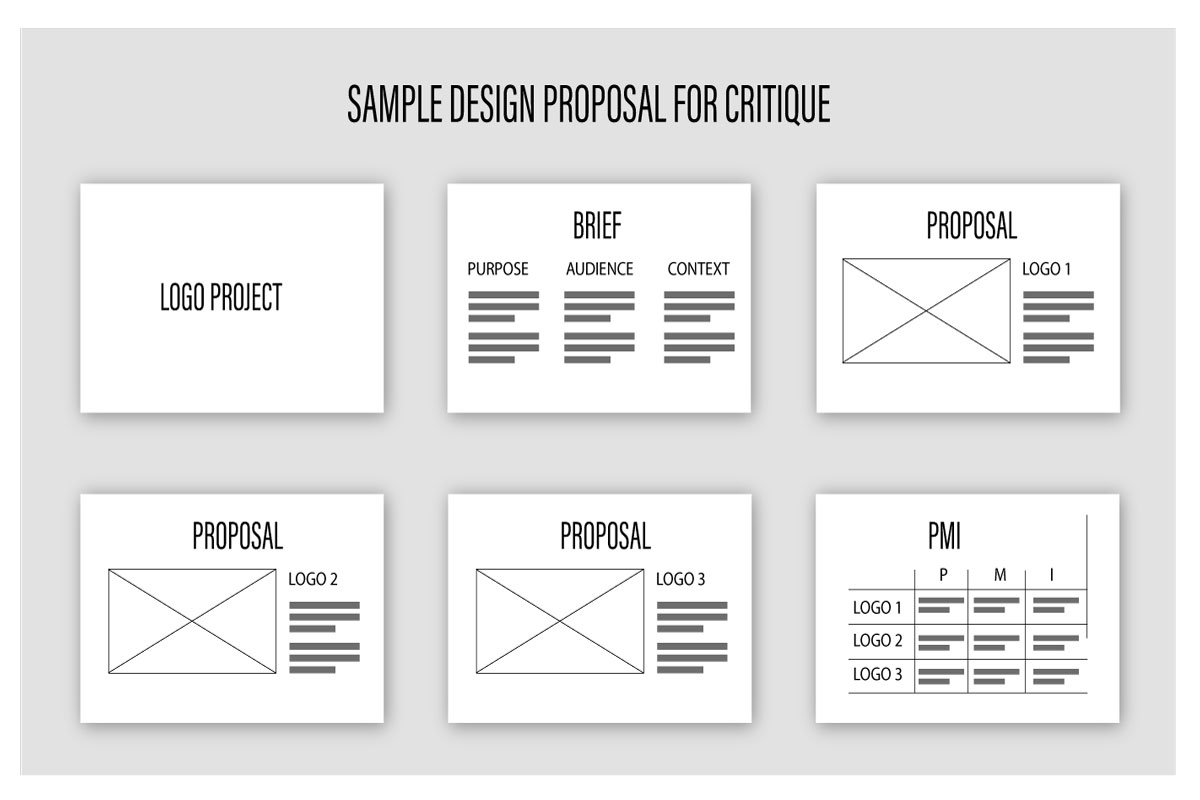
Using a short digital presentation and oral explanation, students summarise the brief and the communication problem they are responding to.
For each idea, students explain how visual language responds to audience, purpose and context, using appropriate design terminology.
Peer feedback is recorded and will be used to support later evaluation, selection and refinement of a design direction.
CONNECTING TO THE STUDY DESIGN
This task reflects professional design practice, where designers communicate ideas to stakeholders and seek critique before refining.
Students practise explaining and justifying design decisions using design language, linking visual choices to the brief.
Presenting for critique supports convergent thinking by helping students compare ideas and identify the strongest direction to progress.
These communication skills support both practical development and the written explanation and evaluation required across Unit 1.
Getting started
Model a short pitch using a familiar brand, showing how to explain why decisions were made, not just what is shown.
Run a 30-second partner warm-up: students describe one idea using audience and purpose, avoiding detail and refinement language.
Discuss what made explanations clear, then provide a simple structure: brief summary → idea intent → key visual decisions → link to audience.
Remind students critique is about improving communication effectiveness, and feedback should be specific, respectful and brief-focused.
Presenting design ideas for critique
| Task items | 1-2 (Very low) | 3-4 (Low) | 5-6 (Medium) | 7/8 (High) | 9/10 (Very high) |
|---|---|---|---|---|---|
|
Selection of ideas Appropriateness of chosen designs Relevance to the brief |
Selected ideas show little relevance to the brief. Choices appear random or unexplained. |
Some relevance is evident. Rationale for selection is unclear. |
Ideas are generally appropriate. Basic reasoning for selection is provided. |
Ideas are well chosen and clearly relevant. Selection is justified in relation to the brief. |
Ideas are strategically selected. Clear, confident justification shows strong understanding of the brief. |
|
Explanation of design decisions Use of audience, purpose and context Clarity of verbal and visual explanation |
Design decisions are not explained. Audience and purpose are not addressed. |
Explanations are vague or incomplete. Limited reference to audience or purpose. |
Design decisions are explained in general terms. Audience and purpose are identified. |
Clear explanations link decisions to the brief. Audience, purpose and context are addressed. |
Explanations are clear, confident and specific. Strong links are made between decisions, audience and communication goals. |
|
Use of design terminology Elements, principles and Gestalt Accuracy and relevance |
No appropriate terminology is used. Language is unclear or incorrect. |
Limited terminology is used. Terms are sometimes inaccurate. |
Some correct terminology is used. Language generally supports explanation. |
Terminology is accurate and appropriate. Language helps clarify design thinking. |
Terminology is used confidently and precisely. Language strongly supports justification of decisions. |
|
Visual communication of ideas Quality of slides Clarity of layout and visuals |
Slides are unclear or incomplete. Visuals do not support understanding. |
Slides communicate some information. Layout or clarity is inconsistent. |
Slides are clear and readable. Visuals support basic understanding. |
Slides communicate ideas clearly and effectively. Layout supports explanation. |
Slides are visually clear, engaging and professional. Visuals strongly support communication of ideas. |
|
Engagement with critique Clarity when responding to questions Openness to feedback |
Student does not engage with feedback. Responses are unclear or dismissive. |
Limited engagement with feedback. Responses lack clarity. |
Responds to feedback in a basic way. Shows some understanding of critique. |
Engages thoughtfully with feedback. Responses show reflection and understanding. |
Engages confidently and constructively with critique. Feedback is clearly understood and valued. |
Key knowledge covered (Unit 1, Outcome 2 – Part 3)
| ✓ / ✗ | Key knowledge |
|---|---|
| ✓ | the role of the brief in developing and evaluating design solutions |
| ✗ | legal and ethical obligations of designers relating to copyright and intellectual property |
| ✓ | methods used to generate communication design solutions |
| ✓ | the role of divergent and convergent thinking in a design process |
| ✓ | techniques for engaging and influencing audiences or users using visual language |
| ✓ | features and functions of design elements and principles, including typographic conventions and Gestalt principles of visual perception |
| ✓ | techniques to present and critique design ideas |
| ✗ | techniques to deliver and respond to constructive feedback |
| ✓ | appropriate design terminology |
Key skills covered (Unit 1, Outcome 2 – Part 3)
| ✓ / ✗ | Key skills |
|---|---|
| ✓ | apply the Develop and Deliver stages of the VCD design process to address a communication need |
| ✗ | identify and apply legal and ethical obligations relevant to communication design practice |
| ✗ | apply divergent thinking strategies when seeking inspiration and generating ideation sketches |
| ✗ | select and use manual and digital methods, media and materials to develop design solutions |
| ✓ | apply convergent thinking strategies to synthesise, select and refine design concepts |
| ✓ | present design concepts for critique, and both deliver and respond to feedback |
| ✗ | resolve visual language responding to a given brief |
| ✓ | use appropriate design terminology during analysis and evaluation |
4. DESIGN EVALUATION
Students collect and analyse structured feedback to evaluate branding ideas and select a justified design direction.
Students design a short survey to gather stakeholder responses about which idea best meets the brief’s audience, purpose and context.
Results are collated and presented visually on an A3 landscape page, supported by a brief written summary of key findings.
Students identify patterns in feedback to recommend improvements and justify a preferred concept using evidence, not personal preference.
CONNECTING TO THE STUDY DESIGN
This task sits within the Develop stage of the VCD design process, where designers test ideas and make decisions using evidence.
Students practise convergent thinking by comparing options, interpreting feedback and selecting a direction that best responds to the brief.
The task strengthens understanding of stakeholder roles and how feedback helps designers evaluate communication effectiveness for audiences.
It also reinforces ethical research practices, including respectful participation, clear questions and accurate, honest presentation of results.
Getting started
Compare informal feedback (first impressions) with formal feedback (structured questions and recorded results) using quick examples.
Show a short sample survey and discuss what makes questions fair, specific and useful for comparing ideas against the brief.
As a warm-up, students write two survey questions that test communication effectiveness (not taste), then refine them in pairs.
Emphasise respectful language, consent and relevance, and remind students that analysis matters more than collecting responses.
Collecting and analysing feedback to select a design direction
| Task items | 1-2 (Very low) | 3-4 (Low) | 5-6 (Medium) | 7/8 (High) | 9/10 (Very high) |
|---|---|---|---|---|---|
|
Survey quality Relevance of questions Alignment to brief |
Survey questions are unclear or irrelevant. Questions do not support comparison of designs. |
Some relevant questions are included. Alignment to the brief is weak. |
Survey questions are mostly clear and relevant. Questions allow basic comparison of ideas. |
Survey questions are clear, purposeful and well aligned. Questions support meaningful comparison. |
Survey questions are insightful and well-targeted. Questions clearly support evaluation against the brief. |
|
Analysis of feedback Identification of patterns Interpretation of results |
Feedback is listed with no analysis. No patterns are identified. |
Limited analysis is evident. Patterns are noted but not explained. |
Some patterns are identified. Analysis shows basic understanding. |
Patterns are clearly identified and explained. Analysis links feedback to design effectiveness. |
Analysis is insightful and well explained. Feedback clearly informs decision-making. |
|
Selection of design direction Justification using evidence Alignment to audience, purpose and context |
Design selection is unclear or unjustified. Decisions appear arbitrary. |
A design is selected with limited justification. Evidence is weak or unclear. |
Design selection is explained using some evidence. Links to the brief are general. |
Design selection is clearly justified. Evidence is linked to the brief. |
Design selection is strongly justified using clear evidence. Decisions show confident understanding of the brief. |
|
Visual presentation of data Clarity and hierarchy Readability of layout |
Data presentation is unclear or confusing. Visual layout hinders understanding. |
Data is presented with limited clarity. Layout is inconsistent. |
Data is presented clearly. Layout supports basic understanding. |
Visual layout clearly communicates findings. Hierarchy supports interpretation. |
Visual presentation is clear, engaging and effective. Layout enhances understanding of findings. |
|
Use of design terminology Correct and appropriate language Support for explanation |
No appropriate terminology is used. Language is unclear. |
Limited terminology is used. Accuracy is inconsistent. |
Some correct terminology is used. Language supports explanation. |
Terminology is accurate and consistent. Language supports justification. |
Terminology is used confidently and precisely. Language clearly supports evaluation and selection. |
Key knowledge covered (Unit 1, Outcome 2 – Part 4)
| ✓ / ✗ | Key knowledge |
|---|---|
| ✗ | conceptions of good design across a range of design disciplines and contexts |
| ✓ | the role of visual language in producing good design outcomes |
| ✓ | the Develop stage of the VCD design process |
| ✓ | techniques for collecting and analysing stakeholder feedback |
| ✓ | ethical research practices relating to consent and respectful participation |
| ✓ | strategies for convergent thinking and evidence-based decision-making |
| ✓ | techniques for the presentation of research findings |
| ✗ | the contents of a brief and its role in reframing ill-defined design problems |
| ✓ | design terminology used in analysis and evaluation |
Key skills covered (Unit 1, Outcome 2 – Part 4)
| ✓ / ✗ | Key skills |
|---|---|
| ✗ | identify and analyse past, present and personal conceptions of good design |
| ✗ | generate a wide range of divergent design ideas |
| ✓ | apply convergent thinking strategies to evaluate and select design ideas |
| ✓ | collect and analyse stakeholder feedback |
| ✓ | justify design decisions using evidence from research and feedback |
| ✗ | resolve and refine design solutions |
| ✓ | present research findings visually |
| ✓ | use appropriate design terminology in evaluation |
5. DESIGN SOLUTION
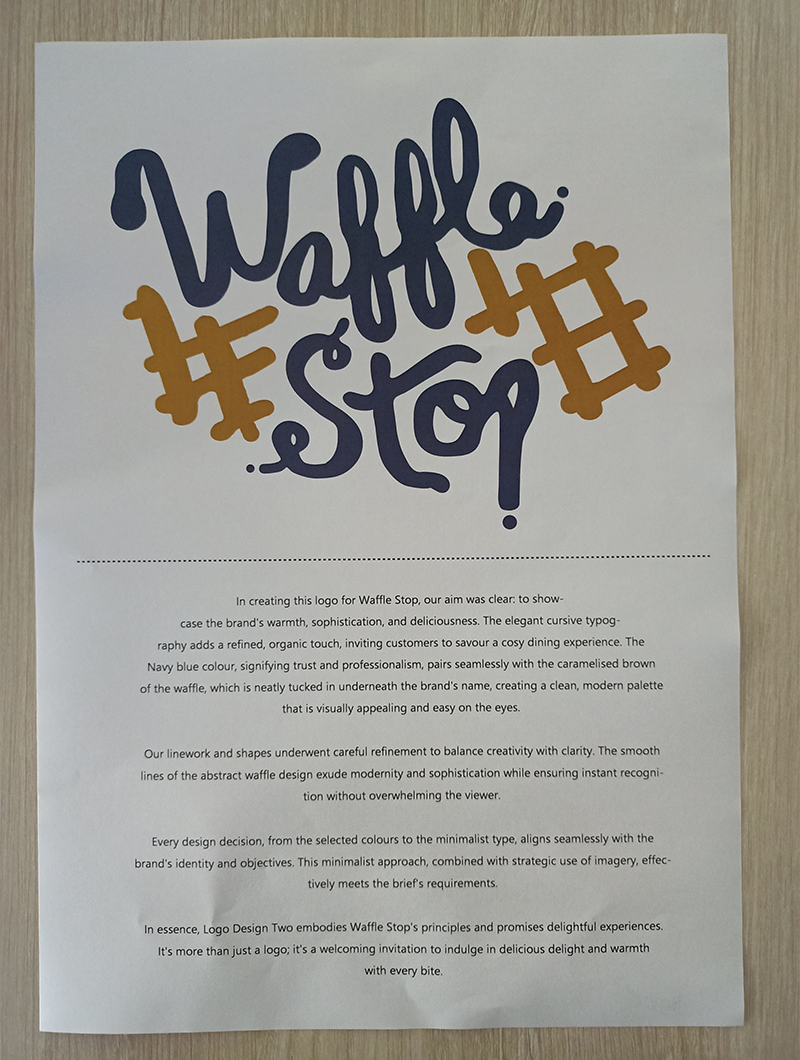
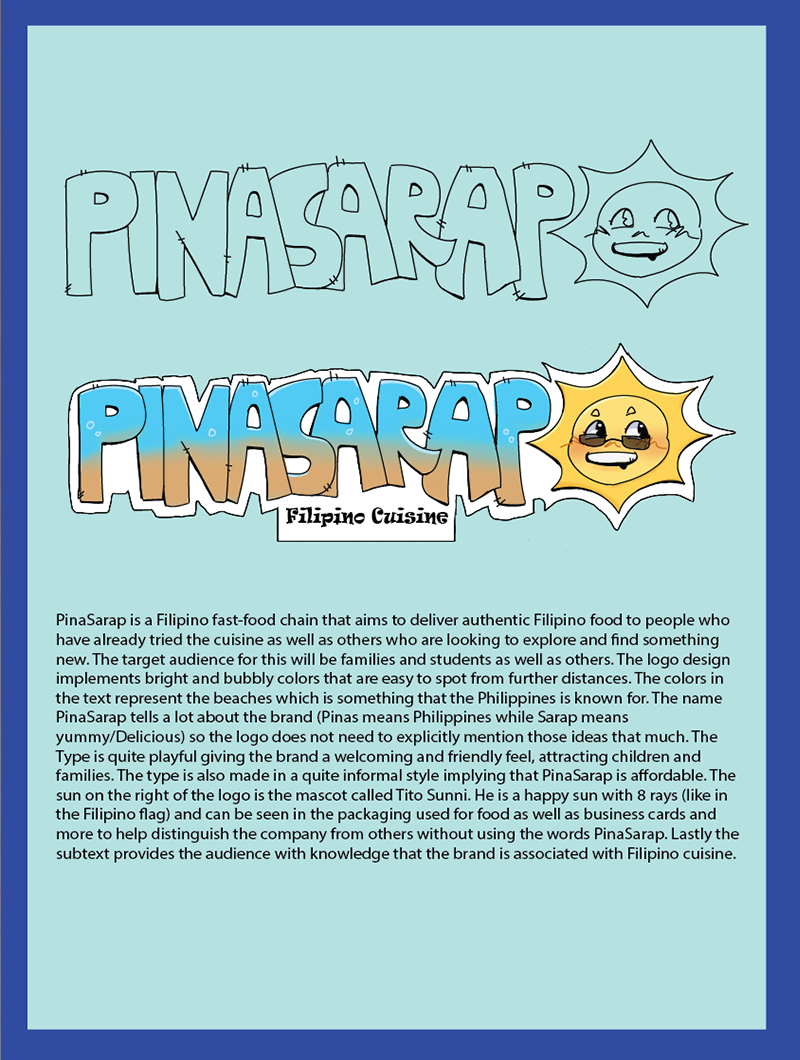
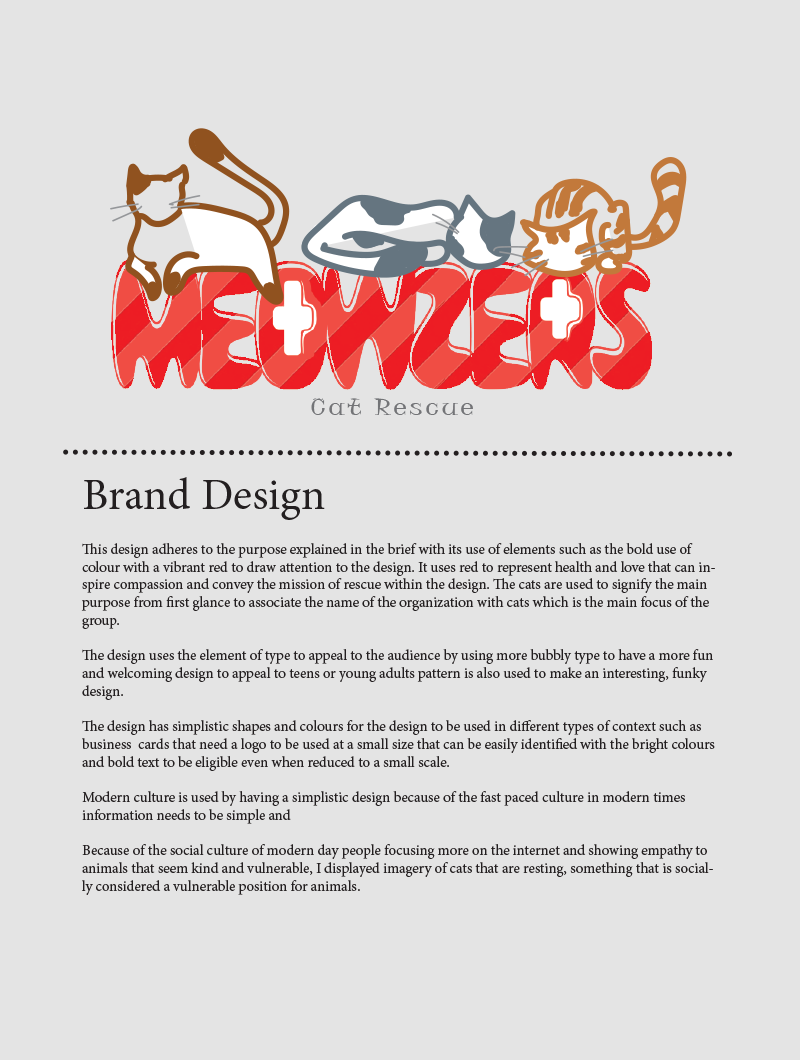
Students produce a resolved branding design solution informed by research, ideation and feedback.
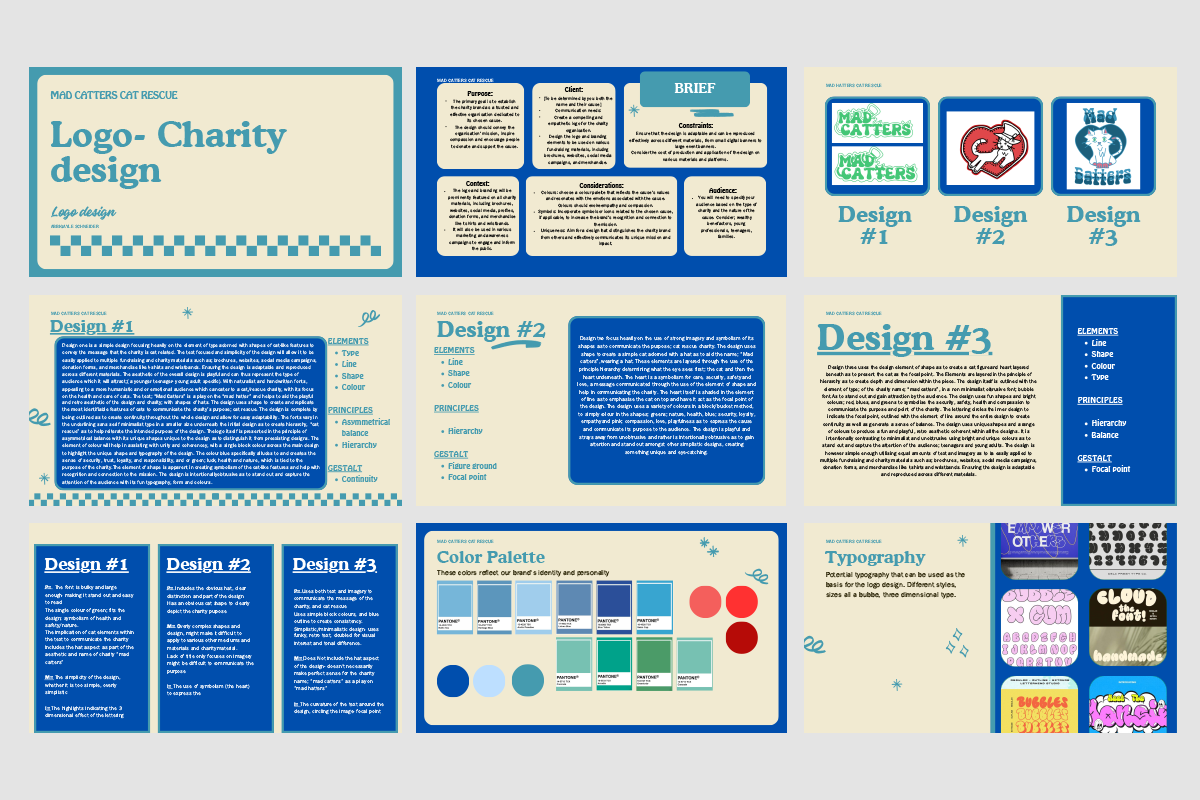
Using Adobe Illustrator, students refine and resolve their selected design direction to clearly address the brief’s purpose, audience, context and constraints.
The final design is presented on a single A3 portrait page and demonstrates clarity, consistency and intentional use of visual language.
Students also write a short rationale (approximately 200 words) explaining how design elements and principles have been used to communicate effectively.
CONNECTING TO THE STUDY DESIGN
This task directly addresses Outcome 2 by requiring students to present a resolved visual communication design.
Students apply design elements and principles intentionally and justify decisions using appropriate design terminology.
The written rationale supports analytical thinking by linking visual choices to audience needs, purpose and context.
This mirrors professional design practice and prepares students for folio-based design processes in later units.
Getting started
Begin by revisiting the selected design direction and the feedback that informed it.
Ask students to identify areas requiring refinement, such as typography, colour, hierarchy or composition.
Analyse a sample branding presentation as a class, focusing on how visual language and written justification work together.
Encourage planning before opening software by annotating intentions and listing key decisions to justify in the rationale.
Resolution and justification of a branding design solution
| Task items | 1-2 (Very low) | 3-4 (Low) | 5-6 (Medium) | 7/8 (High) | 9/10 (Very high) |
|---|---|---|---|---|---|
|
Relevance to brief Purpose, audience and context Response to constraints |
Design shows little relevance to the brief. Purpose and audience are unclear. |
Design partially responds to the brief. Key aspects are overlooked. |
Design responds to the brief in a general way. Purpose and audience are mostly addressed. |
Design clearly addresses the brief. Purpose, audience and context are well considered. |
Design responds precisely and thoughtfully to all aspects of the brief. Constraints are addressed with confidence. |
|
Quality of resolved design Refinement and coherence Professional finish |
Design appears unfinished or unresolved. Visual inconsistencies are evident. |
Some refinement is evident. Design lacks cohesion. |
Design is reasonably resolved. Visual language is mostly consistent. |
Design is well resolved and coherent. Visual language supports communication. |
Design is highly refined and professional. Visual language is purposeful and controlled. |
|
Use of design elements and principles Control of visual language Communication effectiveness |
Design elements and principles are misused or unclear. | Limited or inconsistent use of design elements and principles. | Design elements and principles are used appropriately. | Design elements and principles are applied deliberately. | Design elements and principles are used strategically to enhance communication. |
|
Rationale – explanation of decisions Links to audience, context and purpose |
Rationale is missing or unclear. Decisions are not explained. |
Rationale describes the design with limited explanation. | Rationale explains key decisions in general terms. | Rationale clearly explains design decisions and intent. | Rationale insightfully justifies decisions using clear links to the brief. |
|
Use of design terminology Accuracy and clarity Support for justification |
No appropriate terminology is used. | Limited terminology is used inaccurately. | Some correct terminology is used. | Terminology is accurate and supports explanation. | Terminology is used confidently and precisely to justify design decisions. |
Key knowledge covered (Unit 1, Outcome 2 – Part 5)
| ✓ / ✗ | Key knowledge |
|---|---|
| ✓ | the role of visual language in producing good design outcomes |
| ✓ | features and functions of design elements and principles |
| ✓ | methods, media and materials used to produce design solutions |
| ✓ | relationships between aesthetic decisions, purpose, context and audience |
| ✓ | design terminology used in analysis and evaluation |
Key skills covered (Unit 1, Outcome 2 – Part 5)
| ✓ / ✗ | Key skills |
|---|---|
| ✓ | apply design elements and principles to resolve a design solution |
| ✓ | produce a resolved visual communication appropriate to a specific audience and context |
| ✓ | justify design decisions using written and visual language |
| ✓ | use appropriate design terminology in explanation and evaluation |