Main Course page

Unit 1: Finding, reframing and resolving design problems

Area of Study 1
Reframing design problems · ~4 weeks
On completion of this unit the student should be able to create visual language for a business or brand using the Develop and Deliver stages of the VCD design process.
Area of Study 2
Solving design problems · ~6 weeks
On completion of this unit the student should be able to create visual language for a business or brand using the Develop and Deliver stages of the VCD design process.
Area of Study 3
Design’s influence and influences on design · ~6 weeks
On completion of this unit the student should be able to develop a sustainable object, considering design’s influence and factors that influence design.
Unit 1 Exam
Revision · ~2 weeks
Exam resources to consolidate key knowledge and skills from Unit 1.

Unit 2: Design contexts and connections

Area of Study 1
Design, place and time · ~6 weeks
On completion of this unit the student should be able to present an environmental design solution that draws inspiration from its context and a chosen design style.
Area of Study 2
Cultural ownership and design · ~4 weeks
On completion of this unit the student should be able to apply culturally appropriate design practices and an understanding of the designer’s ethical and legal responsibilities when designing personal iconography.
Area of Study 3
Designing interactive experiences · ~6 weeks
On completion of this unit the student should be able to apply the VCD design process to design an interface for a digital product, environment or service.
Unit 2 Exam
Revision · ~2 weeks
Exam resources to consolidate key knowledge and skills from Unit 2.

Unit 3: Visual communication in design practice

Area of Study 1
Professional design practice · ~4 weeks
On completion of this unit the student should be able to compare the ways in which visual communication practices are used by contemporary designers, using research methods and practical exploration.
Area of Study 2
Design analysis · ~3 weeks
On completion of this unit the student should be able to compare and analyse design examples from selected field(s) of design practice, describing how aesthetic considerations contribute to the effective communication of information or ideas.
Unit 3 Exam
Revision · ~2 weeks
Exam resources to consolidate key knowledge and skills from Unit 3.
Area of Study 3 (SAT folio)
Defining problems and developing ideas · ~8 weeks
On completion of this unit the student should be able to identify two communication needs for a client, prepare a brief and develop design ideas, while applying the VCD design process and design thinking strategies.

Unit 4: Delivering design solutions

Area of Study 1
Refining and resolving design concepts · ~8 weeks
On completion of this unit the student should be able to refine and resolve distinct design concepts for each communication need, and devise and deliver a pitch to communicate concepts to an audience or users, evaluating the extent to which these meet the requirements of the brief.
Area of Study 2
Presenting design solutions · ~3 weeks
On completion of this unit the student should be able to produce a design solution for each communication need defined in the brief, satisfying the specified design criteria.
Final Exam
Revision · ~3 weeks
Exam resources to consolidate key knowledge and skills from Unit 4.


Unit 3 Outcome 1: Professional design practice

What are the visual communication practices used by designers?

Introduction

OUTCOME SUMMARY

Unit 3 Outcome 1 introduces Year 12 Visual Communication Design through professional design practice and exam-ready writing.

As the first Year 12 course, it supports students who may be new to VCD by explicitly teaching key terminology and expectations.

Students investigate how designers work within contexts, using visual communication practices across the four design fields: object, message, environment and interactive experience design.

Across the outcome, students compare design practices and contemporary designers, then apply learning in a timed SAC and practical tasks.

Throughout, students build confidence using design language to discuss visual language, factors, stakeholders/specialists, and ethical and legal responsibilities.

OUTLINE

  • 1. Past vs present design practices

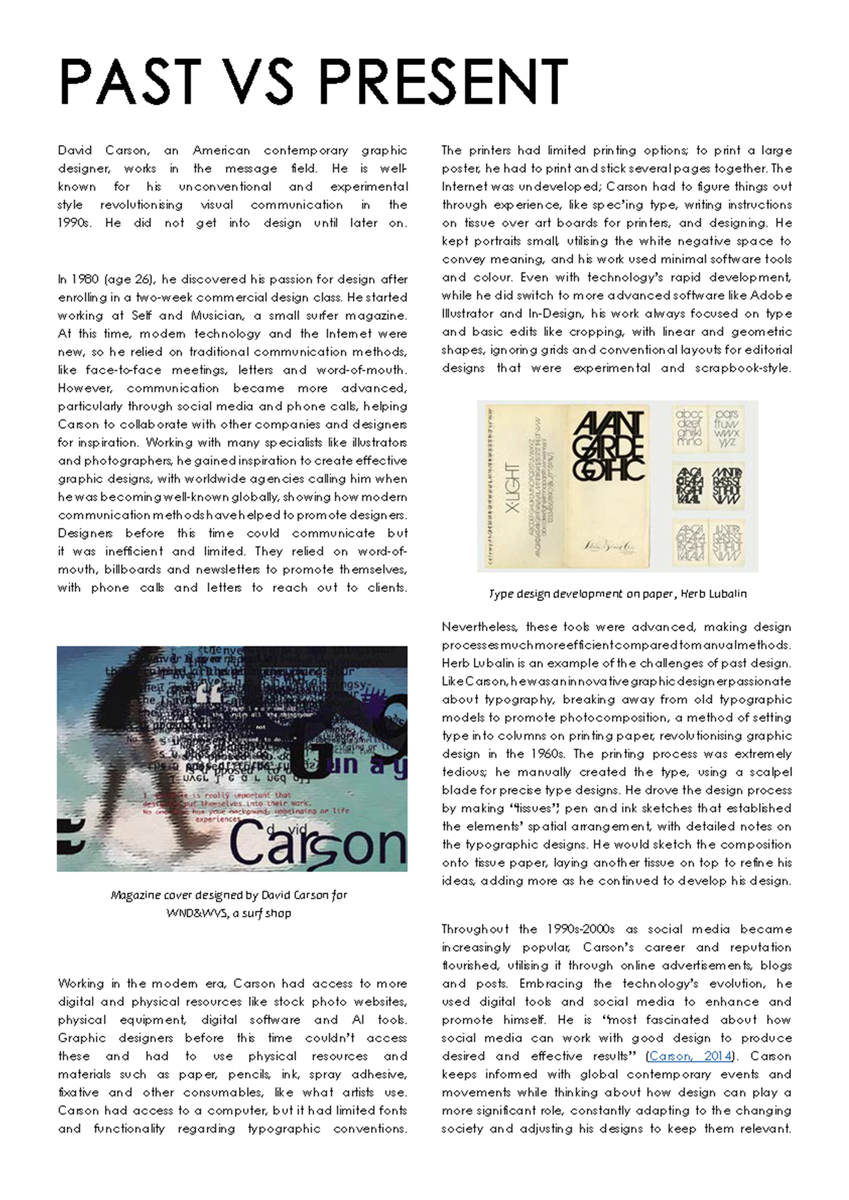
    Compare historical and contemporary practice in one design field, focusing on changes in contexts, technologies, roles, and expectations of good design.

  • 2. Compare contemporary designers

    Analyse two designers’ contexts and visual communication practices, including factors, stakeholders/specialists, and ethical/legal obligations shaping decisions.

  • 3. Written SAC (timed)

    Complete a timed written SAC using command terms to compare, analyse and evaluate professional practice with accurate design terminology.

  • 4. Practical: Idea generation + annotations

    Produce a rapid ideation page showing variety, then annotate ideas using audience/users, purpose, context, stakeholders and factors.

  • 5. Practical: Technical drawing conventions

    Create a technical drawing using field-appropriate conventions to communicate design intent clearly for clients, stakeholders and specialists.

1. Cultural Moodbard

1. PAST VS PRESENT

Students compare past and present design practices within a selected design field.

The task focuses on how professional design practice changes over time in response to evolving contexts, technologies, audiences and expectations of good design.

Students examine differences in methods, media, materials, roles and responsibilities, including how designers collaborate with stakeholders and specialists.

They also analyse how economic, technological, cultural, environmental and social factors influence professional practice.

CONNECTING TO THE STUDY DESIGN

This task directly supports Unit 3, Outcome 1 by developing students’ ability to compare visual communication practices used in professional design practice.

Students investigate how contexts shape the work of designers and how practices differ across time, including shifts in technologies, materials and expectations of good design.

The task reinforces study design language relating to design factors and to the roles and responsibilities of designers, stakeholders and specialists.

These skills prepare students for comparative writing in the timed SAC and for exam-style analysis later in Unit 3.

Getting started

Begin by selecting a design field and presenting two examples from different time periods: one historical and one contemporary.

As a class, identify what has changed and why, considering materials, production methods, visual language, audience expectations, technology and sustainability.

As a warm-up, students complete a short “then vs now” comparison table using headings such as methods, media, materials, stakeholders, constraints and factors.

Students then write a short paragraph explaining how one factor, such as technological or social change, influenced a shift in design practice.

Past vs present design practices in a selected design field

Task items 1–2 (Very low) 3–4 (Low) 5–6 (Medium) 7–8 (High) 9–10 (Very high)
Comparison of practices

Past vs present differences

Clarity and specificity
Comparison is unclear or largely missing. Some comparison but mostly descriptive or vague. Clear comparison with relevant differences identified. Strong comparison with clear examples and explanations. Insightful, precise comparison demonstrating deep understanding of change over time.
Context and change over time

How context shaped design practice

Links to time and place
Context is not addressed. Context is mentioned but not explained. Context is explained with some relevance to practice. Context is clearly linked to how practice changed. Context is analysed with strong cause-and-effect reasoning.
Factors influencing practice

Economic, technological, cultural, environmental, social
Factors are missing or incorrect. One factor is mentioned with limited explanation. Several factors are identified and generally explained. Factors are clearly explained and linked to practice changes. Factors are integrated thoughtfully with strong explanatory depth.
Roles, relationships and responsibilities

Designers, stakeholders and specialists
Roles and relationships are not addressed. Basic mention of roles with limited clarity. Roles and relationships are described clearly. Roles and relationships are explained with relevance to design practice. Insightful explanation of collaboration and professional responsibilities.
Use of terminology and written communication

Accuracy, structure and clarity
Writing is unclear; terminology is absent or incorrect. Writing lacks clarity; terminology is limited. Writing is clear and uses some correct terminology. Writing is well structured and uses accurate terminology. Writing is highly coherent and uses terminology confidently and precisely.

Key knowledge covered (Unit 3, Outcome 1 – Task 1)

✓ / ✗ Key knowledge
✓ contexts in which contemporary designers work
✓ practices and processes, including relevant methods, media, materials and conventions used by contemporary designers
✗ conceptions of good design in selected design field(s) of design practice
✓ differences between past, present and future professional design practices in selected field(s) of design practice
✗ distinguishing characteristics and the role of visual language in selected field(s) of design practice
✓ roles, relationships and responsibilities of designers, specialists and stakeholders when resolving design problems
✗ techniques used by designers to evaluate design ideas
✗ decisions made by designers during the resolution of design problems
✓ technological, economic, cultural, environmental and social factors influencing design practices
✗ ethical and legal obligations of designers
✓ appropriate design terminology

Key skills covered (Unit 3, Outcome 1 – Task 1)

✓ / ✗ Key skills
✓ compare contexts in which contemporary designers work
✓ describe and compare past, present and future professional design practices in selected field(s) of design practice
✗ analyse and evaluate the characteristics and role of visual language in selected field(s) of design practice
✓ explain the roles of, and relationships between, designers, specialists and stakeholders when resolving design problems
✗ describe the techniques used by designers to evaluate design ideas
✗ explain the economic, technological, cultural, environmental and social factors that influence design practices
✗ identify and analyse design practices that acknowledge ethical and legal obligations
✓ use appropriate design terminology

Core concept

Design fields

Practice

Analysing design practices

Factors

Factors that influence design

Roles

Stakeholders & roles

Theory

Conceptions of good design

Example

Student comparison

1. Mind Map Task

2. COMPARE CONTEMPORARY DESIGNERS

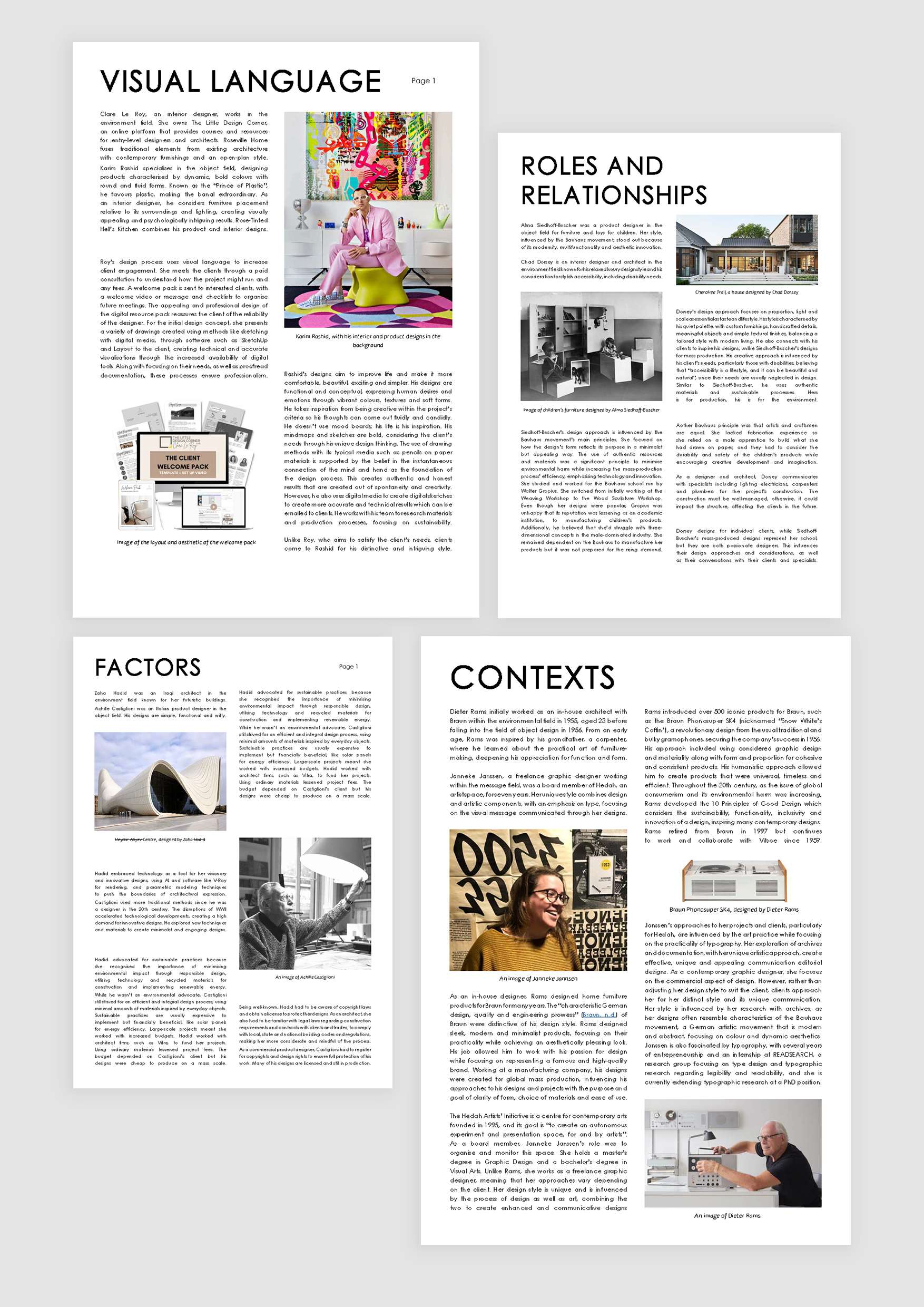
Students analyse and compare how two contemporary designers use visual communication practices in professional design practice.

Students investigate each designer’s context, purpose and audience/users, and examine how visual language is used to communicate ideas and resolve design problems.

Comparisons consider how designers respond to economic, technological, cultural, environmental and social factors, as well as ethical and legal obligations.

Designers may be selected from the same design field or from different fields, reflecting the flexibility of the VCAA examination.

CONNECTING TO THE STUDY DESIGN

This task directly supports Unit 3, Outcome 1 by requiring students to compare how contemporary designers use visual communication practices in professional design practice.

Students analyse how designers work within specific contexts, collaborate with stakeholders and specialists, and apply visual language to communicate meaning.

The task builds analytical and evaluative writing skills required for the written SAC and for exam-style responses in Units 3 and 4.

Getting started

Begin by modelling a short designer comparison using explicit VCD terminology. Highlight what to compare, including context, audience/users, factors, stakeholders and the role of visual language.

Provide students with a comparison planning grid, using one column per designer and shared rows for context, factors, ethical/legal obligations and visual language.

Students then practise writing a single comparative paragraph using linking language such as similarly, in contrast, however and this results in.

Comparative analysis of two contemporary designers

Task items 1–2 (Very low) 3–4 (Low) 5–6 (Medium) 7–8 (High) 9–10 (Very high)
Comparison of contexts

Where and how designers work

Purpose, audiences/users and constraints
Contexts are unclear or mostly missing. Some context description, limited comparison. Contexts are explained and compared clearly. Strong contextual comparison with clear examples. Insightful comparison showing deep understanding of how context shapes practice.
Visual language analysis

Role of visual language

Field conventions and communication purpose
Little or no analysis of visual language. Basic description of visuals with limited analysis. Clear analysis of visual language choices. Strong comparative analysis linking visual language to purpose and audience. Highly analytical and evaluative comparison of visual language and its impact.
Roles, relationships and collaboration

Stakeholders and specialists

Responsibilities in resolving problems
Roles/relationships are not addressed. Limited mention of stakeholders or specialists. Roles and relationships are explained clearly. Clear comparison showing how collaboration shapes outcomes. Insightful explanation of responsibilities, collaboration and its influence on decisions.
Factors influencing practice

Economic, technological, cultural, environmental, social

Influence on decisions and outcomes
Factors are missing or incorrect. One factor mentioned with limited relevance. Several factors identified and generally explained. Factors are clearly linked to design practice and decisions. Factors are integrated thoughtfully with strong cause-and-effect reasoning.
Ethical/legal obligations and evaluation

Intellectual property, ownership, responsibility

How designers evaluate and justify decisions
Ethical/legal obligations are not addressed; evaluation is absent. Limited or vague mention of obligations or evaluation. Obligations and evaluation are described with basic accuracy. Obligations and evaluation are clearly explained and compared. Insightful, well-justified comparison of obligations and evaluation in professional practice.
Writing quality and terminology

Comparative structure and clarity

Accurate VCD language
Writing is unclear; terminology is absent or incorrect. Writing lacks structure; terminology is limited. Writing is clear and uses some accurate terminology. Writing is well structured and uses accurate terminology consistently. Writing is highly coherent, comparative and uses terminology precisely and confidently.

Key knowledge covered (Unit 3, Outcome 1 – Task 2)

✓ / ✗ Key knowledge
✓ contexts in which contemporary designers work
✓ practices and processes, including relevant methods, media, materials and conventions used by contemporary designers
✓ conceptions of good design in selected design field(s) of design practice
✓ differences between past, present and future professional design practices in selected field(s) of design practice
✓ distinguishing characteristics and the role of visual language in selected field(s) of design practice
✓ roles, relationships and responsibilities of designers, specialists and stakeholders when resolving design problems
✓ techniques used by designers to evaluate design ideas
✓ decisions made by designers during the resolution of design problems
✓ technological, economic, cultural, environmental and social factors influencing design practices
✓ ethical and legal obligations of designers
✓ appropriate design terminology

Key skills covered (Unit 3, Outcome 1 – Task 2)

✓ / ✗ Key skills
✓ compare contexts in which contemporary designers work
✓ describe and compare past, present and future professional design practices in selected field(s) of design practice
✓ analyse and evaluate the characteristics and role of visual language in selected field(s) of design practice
✓ explain the roles of, and relationships between, designers, specialists and stakeholders when resolving design problems
✓ describe the techniques used by designers to evaluate design ideas
✓ explain the economic, technological, cultural, environmental and social factors that influence design practices
✓ identify and analyse design practices that acknowledge ethical and legal obligations
✓ use appropriate design terminology

External link

Analysing design practices

External link

Purpose, audience & context

External link

Factors that influence design

External link

Stakeholders, critique & pitch

External link

Legal & ethical

Example

Student example

Video

Comparing Designers

Video

Neri Oxman Mini Documentary

Video

Paula Scher Mini Documentary

Video

Ian Spalter Mini Documentary

1. Mind Map Task

3. WRITTEN SAC (TIMED)

Students complete a written School-assessed Coursework (SAC) under timed conditions.

The SAC is designed to confirm students’ ability to recall, apply and communicate the knowledge accumulated through the previous two tasks: past versus present design practices and contemporary designer comparisons.

Students respond to questions requiring comparison, analysis and explanation of professional design practice, including visual language, factors influencing design, and the roles of designers, stakeholders and specialists.

This task also provides students with their first formal exposure to Unit 3–4 level written assessment, mirroring the structure, language and expectations of VCAA examinations.

CONNECTING TO THE STUDY DESIGN

This task directly assesses Unit 3, Outcome 1 by requiring students to demonstrate understanding of professional visual communication design practice through written comparison and analysis.

Students apply study design language relating to context, visual language, influencing factors, and the roles and responsibilities of designers working with stakeholders and specialists.

The SAC develops students’ capacity to write clear, analytical and evaluative responses independently under time constraints.

These skills are essential for success in both the Unit 3 and Unit 4 written examinations.

Getting started

Begin by explicitly teaching students how to interpret and respond to command terms such as analyse, discuss, compare and evaluate.

Model how to structure short-answer and extended responses using evidence and accurate Visual Communication Design terminology.

In the lead-up to the SAC, provide regular timed response training questions using both open-book and closed-book conditions to build recall, speed and confidence.

Teachers should base practice questions on previous VCAA examinations and sample assessment material to familiarise students with exam-style wording and mark allocation.

Written SAC: Professional design practice and visual communication

Task items 1–2 (Very low) 3–4 (Low) 5–6 (Medium) 7–8 (High) 9–10 (Very high)
Understanding of design practice

Contexts, processes and professional practice
Shows little understanding of design practice. Basic understanding with significant inaccuracies. Demonstrates generally accurate understanding. Demonstrates clear and accurate understanding with relevant detail. Demonstrates sophisticated and nuanced understanding of professional practice.
Comparative and analytical writing

Use of evidence and reasoning
Minimal comparison/analysis; largely descriptive. Some comparison/analysis but limited evidence. Clear comparison/analysis with some supporting evidence. Strong comparison/analysis supported by relevant evidence. Highly analytical and evaluative writing with strong reasoning and evidence.
Visual language analysis

Design elements/principles and conventions

Link to purpose/audience/context
Little or no analysis of visual language. Basic description of visuals with weak links to purpose. Clear explanation of visual language choices. Strong analysis linking visual language to purpose, context and audience/users. Insightful evaluation of how visual language communicates meaning and impact.
Factors, stakeholders and specialists

Influence and responsibilities
Does not address factors or roles accurately. Limited mention of factors or roles. Explains factors and roles with basic accuracy. Explains clearly how factors and roles influence decisions. Integrates factors and roles insightfully to explain professional decision-making.
Terminology and clarity

Structure and command term response
Terminology is absent/inaccurate; writing unclear. Limited terminology; structure is weak. Uses some appropriate terminology; writing is generally clear. Uses accurate terminology consistently; writing is well structured. Uses terminology precisely and writes with strong clarity and control.

Key knowledge covered (Unit 3, Outcome 1 – Task 3)

✓ / ✗ Key knowledge
✓contexts in which contemporary designers work
✓practices and processes, including relevant methods, media, materials and conventions used by contemporary designers
✓conceptions of good design in selected design field(s) of design practice
✓differences between past, present and future professional design practices in selected field(s) of design practice
✓distinguishing characteristics and the role of visual language in selected field(s) of design practice
✓roles, relationships and responsibilities of designers, specialists and stakeholders when resolving design problems
✓techniques used by designers to evaluate design ideas
✓decisions made by designers during the resolution of design problems
✓technological, economic, cultural, environmental and social factors influencing design practices
✓ethical and legal obligations of designers
✓appropriate design terminology

Key skills covered (Unit 3, Outcome 1 – Task 3)

✓ / ✗ Key skills
✓compare contexts in which contemporary designers work
✓describe and compare past, present and future professional design practices in selected field(s) of design practice
✓analyse and evaluate the characteristics and role of visual language in selected field(s) of design practice
✓explain the roles of, and relationships between, designers, specialists and stakeholders when resolving design problems
✓describe the techniques used by designers to evaluate design ideas
✓explain the economic, technological, cultural, environmental and social factors that influence design practices
✓identify and analyse design practices that acknowledge ethical and legal obligations
✓use appropriate design terminology

External link

VCAA Visual Communication Design Exams

External link

VCAA Command Terms Glossary

Course resources

Unit 3 Trial Exam

1. Mind Map Task

4. PRACTICAL: IDEA GENERATION & ANNOTATIONS

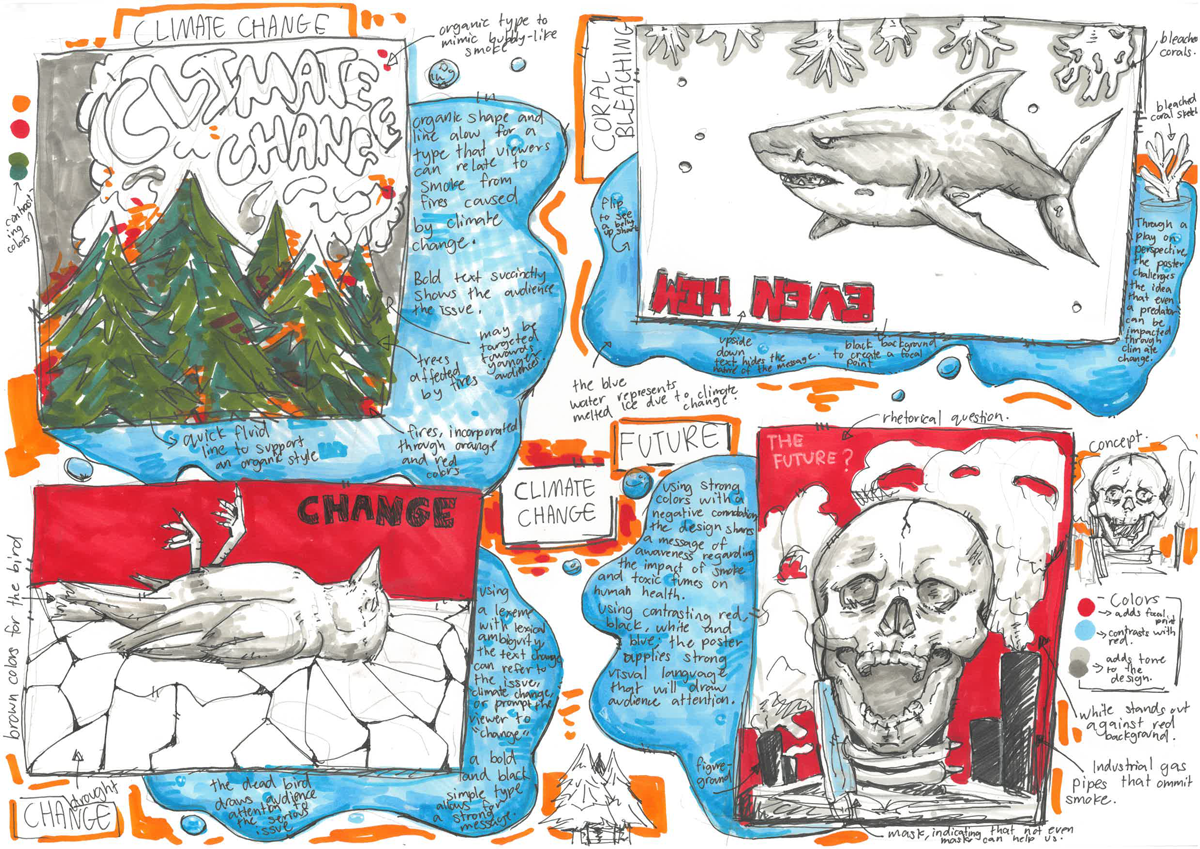
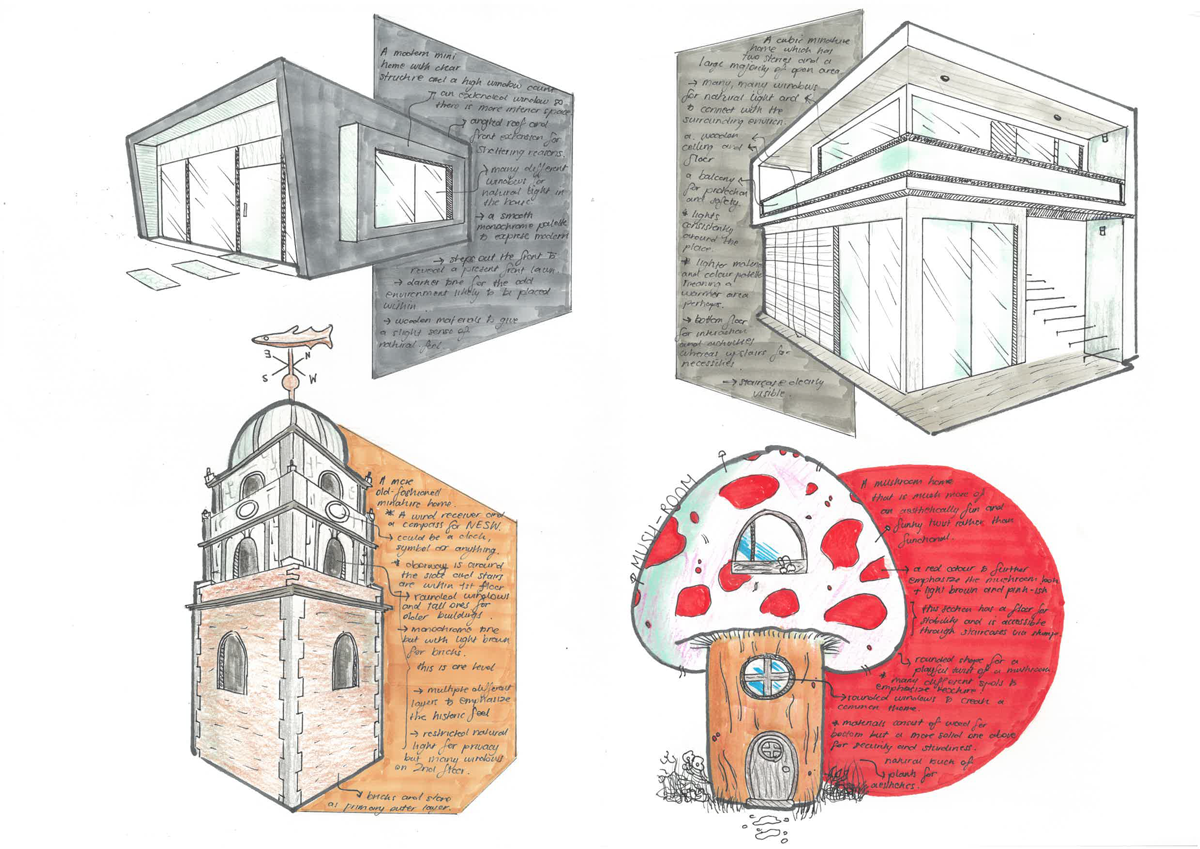
Students use rapid ideation to generate a broad range of design ideas relevant to a selected design field.

Working quickly, students produce an A3 idea generation page (or equivalent) that explores multiple visual directions rather than refined solutions.

Ideas demonstrate variety in visual language and are supported by concise annotations using appropriate Visual Communication Design terminology.

Annotations explain how ideas respond to a nominated purpose, audience/users and context, and may reference plausible factors and stakeholders.

CONNECTING TO THE STUDY DESIGN

This task supports Unit 3, Outcome 1 by strengthening students’ practical exploration of visual communication practices used in professional design fields.

By generating and annotating ideas, students practise communicating design thinking using terminology aligned with professional documentation.

While specific designers are not required, the task reinforces consideration of context, audience/users and influences on design practice.

These skills support both written analysis tasks and later folio-based design development.

Getting started

Begin by modelling what rapid ideation looks like, emphasising quick sketches that capture intent rather than polished outcomes.

Analyse an effective ideation page as a class, identifying variety, clarity of labelling and purposeful annotations.

As a warm-up, students complete a 10-minute idea sprint, generating four mini-thumbnails for the same purpose and audience.

Students then add one short annotation to each idea using terms such as context, constraints, stakeholders and factors.

Practical design exercise: idea generation and annotations

Task items 1–2 (Very low) 3–4 (Low) 5–6 (Medium) 7–8 (High) 9–10 (Very high)
Range of ideas

Evidence of divergent thinking

Variety of approaches
Very few ideas; limited exploration. Some ideas but limited variety. A range of ideas with some variety. A broad range of ideas exploring different directions. Extensive, diverse ideation demonstrating strong divergent thinking.
Relevance to purpose and audience/users

Context awareness
Ideas are not clearly linked to purpose/audience. Some links to purpose/audience but inconsistent. Ideas generally respond to purpose/audience/context. Ideas clearly respond to purpose/audience/context. Ideas respond insightfully and consistently to purpose, audience/users and context.
Visual communication and clarity

Readability of drawings

Effective presentation
Drawings are unclear or difficult to interpret. Some clarity but inconsistent communication. Drawings communicate ideas adequately. Drawings are clear and support understanding. Drawings are highly clear, purposeful and communicate intent strongly.
Use of factors and stakeholders

Plausible influence on ideas

Learning the language of practice
Factors/stakeholders not referenced. Factors/stakeholders mentioned vaguely. Factors/stakeholders included with basic relevance. Factors/stakeholders are clearly linked to design decisions. Factors/stakeholders are integrated thoughtfully to justify design directions.
Annotation quality and terminology

Descriptive + evaluative language

Correct VCD terms
Annotations missing or unclear; terminology absent. Annotations mostly descriptive; limited terminology. Annotations explain ideas with some correct terminology. Annotations clearly justify ideas using accurate terminology. Annotations are insightful, evaluative and use terminology confidently and precisely.

Key knowledge covered (Unit 3, Outcome 1 – Task 4)

✓ / ✗ Key knowledge
✓ practices and processes, including relevant methods, media, materials and conventions used by contemporary designers
✗ differences between past, present and future professional design practices in selected field(s) of design practice
✓ distinguishing characteristics and the role of visual language in selected field(s) of design practice
✓ technological, economic, cultural, environmental and social factors influencing design practices
✗ ethical and legal obligations of designers
✓ appropriate design terminology

Key skills covered (Unit 3, Outcome 1 – Task 4)

✓ / ✗ Key skills
✗ compare contexts in which contemporary designers work
✗ describe and compare past, present and future professional design practices in selected field(s) of design practice
✗ analyse and evaluate the characteristics and role of visual language in selected field(s) of design practice
✗ explain the roles of, and relationships between, designers, specialists and stakeholders when resolving design problems
✗ describe the techniques used by designers to evaluate design ideas
✗ identify and analyse design practices that acknowledge ethical and legal obligations
✓ apply visual communication practices and processes used in selected field(s) of design practice
✓ use visual language to communicate ideas and/or information to specific audiences, and for specific purposes and contexts
✓ adopt conceptions of good design aligned with selected field(s) of design practice
✓ use appropriate design terminology

Video

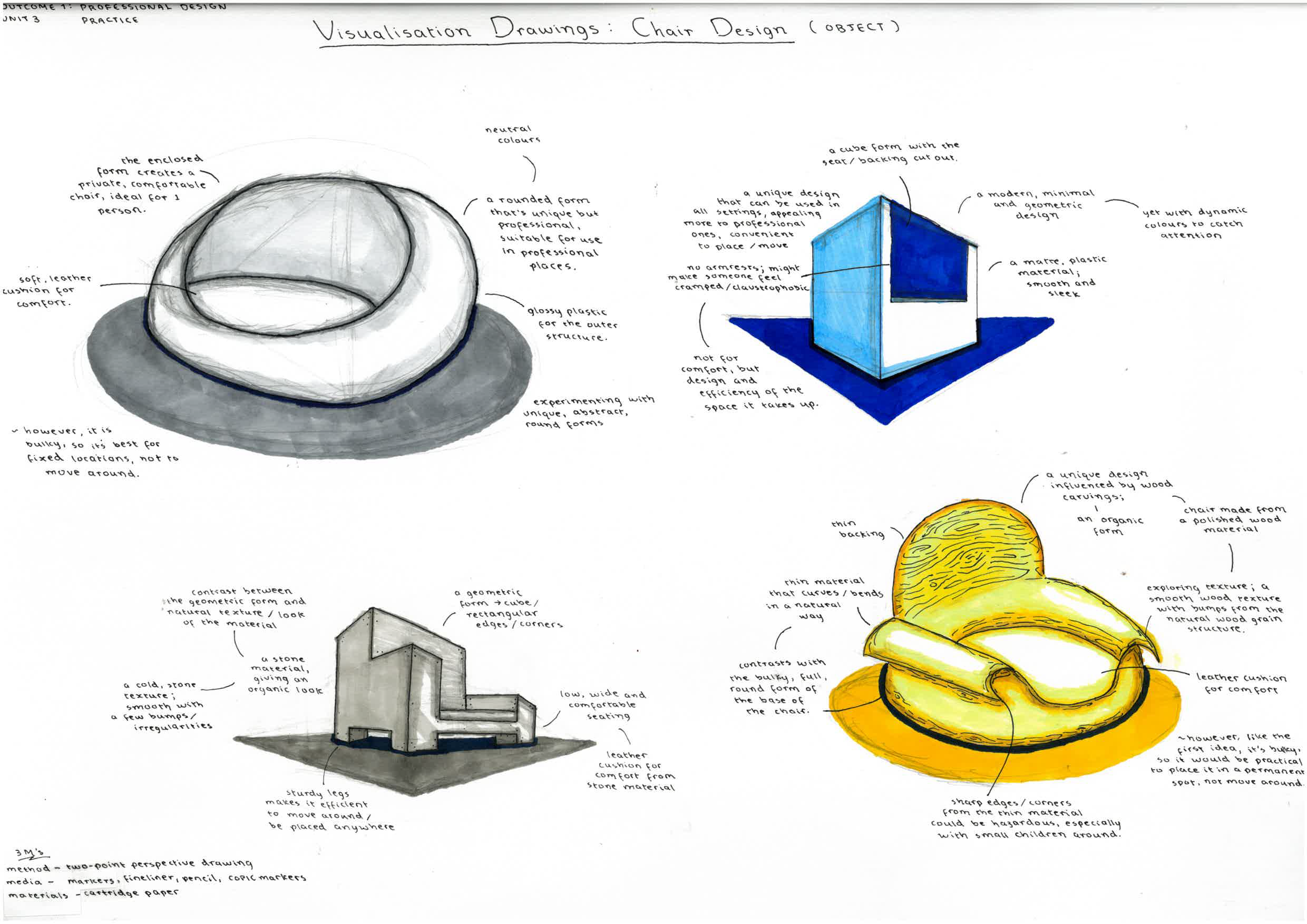
Object Design Ideation

Video

Environment Design Ideation

Example

Message Design Ideation

Example

Environment Design Ideation

Example

Object Design Ideation

1. Mind Map Task

5. PRACTICAL: TECHNICAL DRAWING CONVENTIONS

Students produce a technical drawing using conventions appropriate to their selected design field.

The task focuses on the accurate and clear communication methods designers use to document and present ideas to stakeholders, specialists and clients.

Students apply relevant drawing systems and conventions such as scale, dimensions, labels, line weight, annotations and symbols, depending on the design field.

Drawings may be produced using manual or digital methods. Emphasis is placed on control, clarity and correct use of conventions to communicate design intent professionally.

CONNECTING TO THE STUDY DESIGN

This task supports Unit 3, Outcome 1 by strengthening students’ understanding of visual communication practices used in professional design practice.

Technical drawing conventions are a core aspect of professional practice, enabling designers to communicate precisely with stakeholders and specialists.

By applying field-specific conventions, students demonstrate their ability to use processes and practices characteristic of contemporary designers.

The task develops technical accuracy, presentation standards and design terminology, supporting both practical skill development and future folio work.

Getting started

Begin by revisiting technical drawing examples relevant to different design fields, such as orthogonal drawings for objects, floorplans and elevations for environments, layout structures for message design, or interface structures for interactive experiences.

Discuss why conventions exist: to communicate information efficiently, accurately and consistently, reducing misunderstanding in professional contexts.

As a warm-up, students complete a conventions checklist, identifying scale, dimensions, labels and symbols in an example drawing.

Provide templates or scaffolds aligned to the selected design field, and encourage students to plan layout and structure before producing their final drawing.

Practical design exercise: technical drawing using field conventions

Task items 1–2 (Very low) 3–4 (Low) 5–6 (Medium) 7–8 (High) 9–10 (Very high)
Use of conventions

Field-appropriate symbols, labels, scale, dimensions
Conventions are missing or incorrect. Some conventions included but inconsistent or inaccurate. Conventions are mostly correct and appropriate. Conventions are accurate and clearly applied. Conventions are applied precisely to a professional standard.
Technical accuracy

Proportion, structure and correctness
Drawing is inaccurate and unclear. Basic accuracy with noticeable errors. Generally accurate with minor errors. Accurate and clearly structured drawing. Highly accurate, controlled and technically convincing.
Communication of design intent

Readability and clarity for an audience
Intent is unclear; hard to interpret. Some intent communicated, but unclear in parts. Intent is communicated clearly overall. Drawing communicates intent clearly and efficiently. Drawing communicates intent with high clarity and professional readability.
Presentation and layout

Organisation, hierarchy and neatness
Presentation is disorganised or incomplete. Some organisation but inconsistent layout. Layout is organised and readable. Layout is well organised with clear hierarchy. Layout is highly refined and professionally presented.
Terminology and annotations

Correct labels and explanations
No labels/annotations; terminology absent. Limited labels; terminology basic or incorrect. Appropriate labels and some correct terminology. Labels and terminology are accurate and consistent. Terminology is precise and enhances clarity and professionalism.

Key knowledge covered (Unit 3, Outcome 1 – Task 5)

✓ / ✗ Key knowledge
✓ practices and processes, including relevant methods, media, materials and conventions used by contemporary designers
✗ differences between past, present and future professional design practices in selected field(s) of design practice
✓ distinguishing characteristics and the role of visual language in selected field(s) of design practice
✗ technological, economic, cultural, environmental and social factors influencing design practices
✗ ethical and legal obligations of designers
✓ appropriate design terminology

Key skills covered (Unit 3, Outcome 1 – Task 5)

✓ / ✗ Key skills
✗ compare contexts in which contemporary designers work
✗ describe and compare past, present and future professional design practices in selected field(s) of design practice
✗ analyse and evaluate the characteristics and role of visual language in selected field(s) of design practice
✗ explain the roles of, and relationships between, designers, specialists and stakeholders when resolving design problems
✗ describe the techniques used by designers to evaluate design ideas
✗ identify and analyse design practices that acknowledge ethical and legal obligations
✓ apply visual communication practices and processes used by contemporary designers in selected field(s) of design practice
✓ incorporate relevant conventions in documentation or presentation drawings in selected fields of design practice
✓ use presentation formats characteristic of selected field(s) of design practice
✗ apply legal and ethical obligations relevant to selected fields of design practice

Official

VCAA technical conventions

Drawing

Drawing systems

Drawing

Drawing conventions

Drawing

Drawing types

Conventions

Design field conventions

Core concept

Design fields